
An employee health risk assessment is a confidential process that combines a structured questionnaire with biometric data to identify health risk factors across your workforce. The formal industry term is "health risk assessment," or HRA, and it sits at the foundation of every evidence-based workplace wellness program. When designed well, an HRA gives HR professionals a clear picture of where chronic disease risk, mental health strain, and lifestyle factors are concentrated. Hadaco reports that companies using structured health programs see an average savings of $451 per employee in their first year. That figure reflects what happens when you replace guesswork with data.
What does a comprehensive employee health risk assessment include?
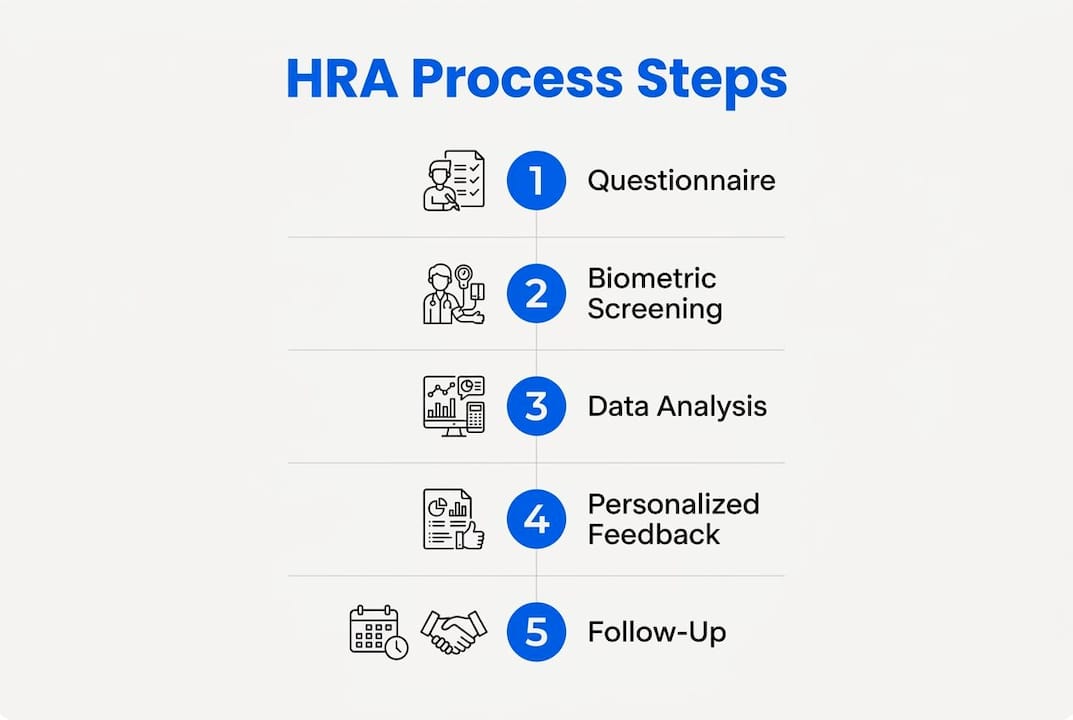
A well-built HRA has two core components: a self-reported questionnaire and biometric screening. Neither works as well without the other.
The questionnaire typically takes 15–30 minutes to complete online. It covers medical history, current medications, lifestyle behaviors like sleep and physical activity, mental health indicators, and workplace stress factors. The depth of this section determines how useful the data is for program design. A surface-level questionnaire produces surface-level insights.
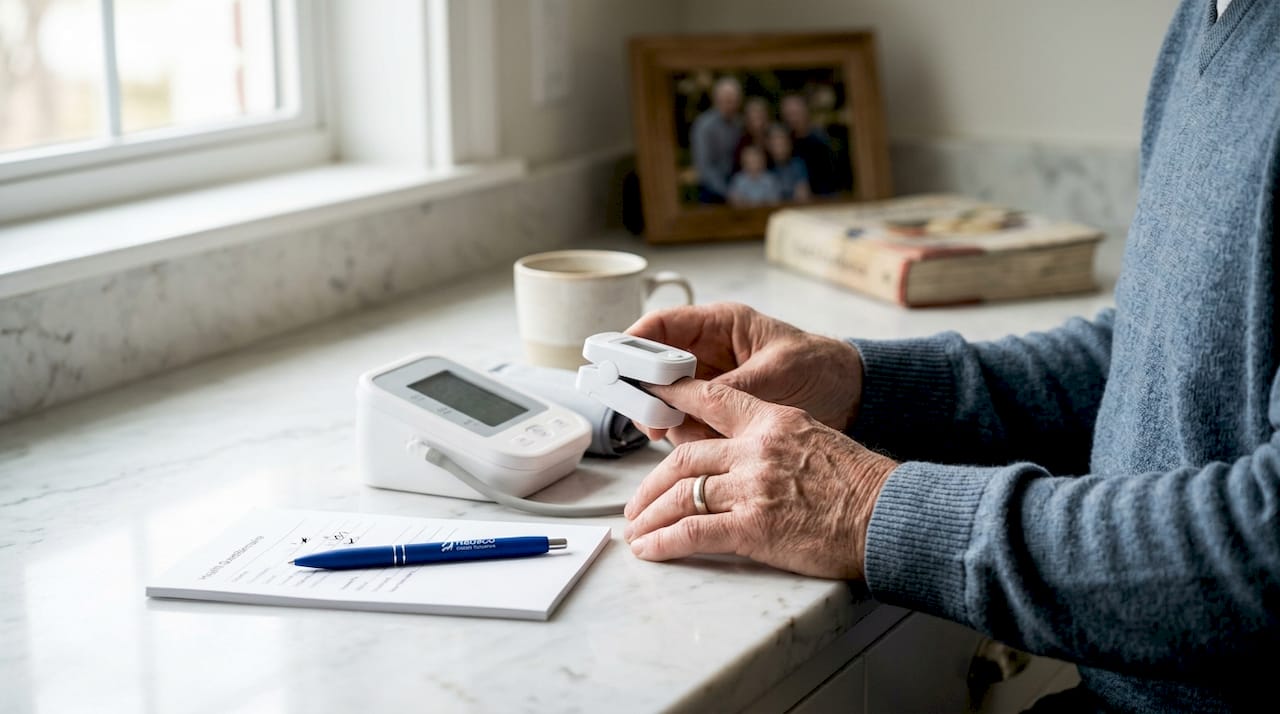
Biometric screening fills in what self-reporting cannot. The standard panel includes blood pressure, total cholesterol, fasting glucose, BMI, and waist circumference. These numbers reveal risk factors that employees themselves may not know they have. A 45-year-old employee who reports feeling "fine" may still carry undetected hypertension or prediabetes.
Key biometric measures in occupational health screening
- Blood pressure: Identifies hypertension risk, the leading driver of cardiovascular claims
- Fasting glucose: Screens for prediabetes and Type 2 diabetes, both highly manageable with early intervention
- Total cholesterol: Flags cardiovascular risk before symptoms appear
- BMI and waist circumference: Tracks metabolic syndrome risk at the population level
- Mental health indicators: Standardized tools like PHQ-9 and GAD-7 screen for depression and anxiety
Modern at-home biometric kits have changed participation math significantly. At-home screening solutions have driven participation increases of 200%, with a 60% opt-in rate and a 96% completion rate among those who start. That completion rate matters because incomplete data skews your workforce health picture.
Pro Tip: Pair your HRA launch with a short explainer video from your CEO or CHRO. Leadership visibility at launch is the single fastest way to lift participation rates.
Quality benchmarks for HRA tools include NCQA certification, which signals that the tool meets validated clinical and data standards. When evaluating workforce health survey platforms, ask vendors directly whether their questionnaire is NCQA-certified or validated against peer-reviewed instruments.
How do data privacy and participation shape HRA effectiveness?
Data privacy concerns directly suppress participation unless employees trust the process. This is not a soft concern. When employees believe their health data could affect their employment or insurance status, they either skip the assessment or answer dishonestly. Both outcomes destroy the data quality you need.
The standard for trustworthy HRA administration includes these protections:
- Third-party administration: An independent vendor collects and holds data, not your HR team
- Encrypted data storage: All responses and biometric results are stored with enterprise-grade encryption
- Separation from personnel files: Health data never enters an employee's HR record
- Clear written consent: Employees receive plain-language disclosure before they begin
- Aggregate-only reporting: Employers receive population-level data, never individual results
HIPAA sets the legal floor for health data handling, but best-practice programs go further. Employees need to see the privacy policy before they start, not buried in a terms-of-service page.
Pro Tip: Send a one-page privacy FAQ to employees before the HRA opens. Address the three most common fears directly: "Will my employer see my results?" "Can this affect my insurance?" "Who stores my data?" Answering these questions upfront removes the biggest barrier to participation.
Trust-building is an ongoing process, not a one-time disclosure. Organizations that run repeated HRAs every one to three years report steadily improving participation as employees see that their data is handled responsibly and that the program produces real benefits for them.
What does the evidence say about HRAs and healthcare costs?
The research on workplace wellness programs is more nuanced than most vendor pitches suggest. A systematic review of 33 studies published since 2000 found mixed results across health behaviors, healthcare costs, absenteeism, and mental health outcomes. Mixed results do not mean no results. They mean that program design, follow-up quality, and measurement consistency vary enormously across organizations.
One persistent problem is selection bias. Healthier employees participate at higher rates, which inflates apparent program benefits. If your ROI calculation compares participants to non-participants without adjusting for baseline health status, you are measuring who chose to participate, not what the program actually did.
Measuring wellness program value by short-term cost savings alone is the wrong framework. The defensible approach tracks engagement rates, cultural indicators, productivity metrics, and long-term healthcare utilization across multiple years. Short-term ROI calculations are too easily distorted by selection bias and one-time events to be reliable on their own.
Wellness experts recommend a four-tier measurement framework that covers engagement, culture, productivity, and long-term healthcare utilization. This approach produces data that holds up to scrutiny over time.
| Measurement tier | What it tracks | Why it matters |
|---|---|---|
| Engagement | Participation rates, repeat HRA completion | Shows program reach and employee trust |
| Culture | Wellness culture surveys, leadership participation | Reflects organizational commitment |
| Productivity | Absenteeism, presenteeism, turnover rates | Connects health to business performance |
| Healthcare utilization | Claims trends, preventive care usage | Tracks long-term cost trajectory |
The most durable value of an HRA is the baseline health snapshot it creates. Without a baseline, you cannot measure change. With one, you can show a CFO exactly how your workforce health profile shifted over three years and what that movement cost or saved.
How should employers implement HRAs to get real results?
The HRA is the starting point, not the destination. Assessment without follow-up produces minimal value. Employees who complete a health risk evaluation and receive no personalized feedback or program invitation quickly conclude that the exercise was performative. That perception kills future participation.
A practical implementation sequence looks like this:
- Set a clear objective. Decide whether you are targeting chronic disease prevalence, mental health support, or general wellness culture before you choose your HRA tool.
- Select a validated, NCQA-certified platform. Tool quality determines data quality. A poorly designed questionnaire produces noise, not insight.
- Communicate early and often. Send three pre-launch communications: a leadership announcement, a privacy FAQ, and a participation incentive notice.
- Offer positive incentives. Premium reductions, HSA contributions, or gift cards tied to completion (not results) drive participation without coercion.
- Deliver personalized feedback within 48 hours. Every participant should receive an individual health summary with clear next steps.
- Connect high-risk employees to support. Route employees with elevated biometric results or high stress scores to health coaching, Employee Assistance Programs, or occupational health follow-up.
- Repeat every one to three years. Periodic HRAs enable longitudinal tracking and show whether your interventions are working.
The most common implementation error is treating the HRA as a one-time event. Organizations that run a single assessment, file the aggregate report, and move on see no measurable improvement. The data only creates value when it drives a program calendar, coaching referrals, and targeted interventions.
A well-designed HRA program integrates personalized feedback, occupational health follow-up, and privacy safeguards. That integration is what separates programs that reduce claims from programs that generate reports.
Pro Tip: Build your post-HRA communication calendar before you launch. Map out who receives what message, when, and through which channel. Employees who get a personalized follow-up within two business days are far more likely to act on their results.
Key Takeaways
A structured employee health risk assessment creates the data foundation that every effective workplace wellness program requires, and its value compounds when paired with consistent follow-up and multi-year measurement.
| Point | Details |
|---|---|
| HRA components | Combine a 15–30 minute questionnaire with biometric screening for complete workforce health data. |
| Privacy drives participation | Third-party administration and encrypted data storage are non-negotiable for honest, high-volume responses. |
| Follow-up is mandatory | Assessment without personalized coaching or program referrals produces no measurable behavior change. |
| Measure beyond short-term ROI | Track engagement, culture, productivity, and healthcare utilization across multiple years for defensible results. |
| Repeat every 1–3 years | Periodic assessments build the longitudinal baseline needed to show real workforce health improvement. |
Why most HRA programs underdeliver (and how to fix that)
After working with employers across industries, the pattern I see most often is this: the HRA gets launched with genuine enthusiasm, participation hits a reasonable number, the aggregate report lands in someone's inbox, and then nothing happens. No coaching referrals. No program invitations. No follow-up communication to participants. Six months later, the data is stale and the opportunity is gone.
The uncomfortable truth is that most HRA programs fail at the follow-up stage, not the assessment stage. The questionnaire and biometric kit are the easy part. Building the infrastructure to act on what you learn is where organizations consistently underinvest.
Data privacy is the second place I see programs collapse. HR teams sometimes want direct access to individual results, believing it will help them target support more effectively. That instinct is understandable but counterproductive. The moment employees suspect their results are visible to their manager or HR file, participation drops and honest answers disappear. Independent third-party administration is not a nice-to-have. It is the structural requirement that makes the data trustworthy.
The organizations I have seen get this right share one trait: leadership treats the HRA as a multi-year commitment, not an annual checkbox. They budget for health coaching. They communicate results back to employees in aggregate. They show the workforce that the data produced real program changes. That transparency is what builds the trust that drives 96% completion rates and genuine behavior change over time. Hadaco's approach of pairing workforce health tracking with quarterly reporting reflects exactly this kind of accountability structure.
— Gene
How Hadaco supports your workforce health program
Running an effective employee health assessment program requires more than a good questionnaire.
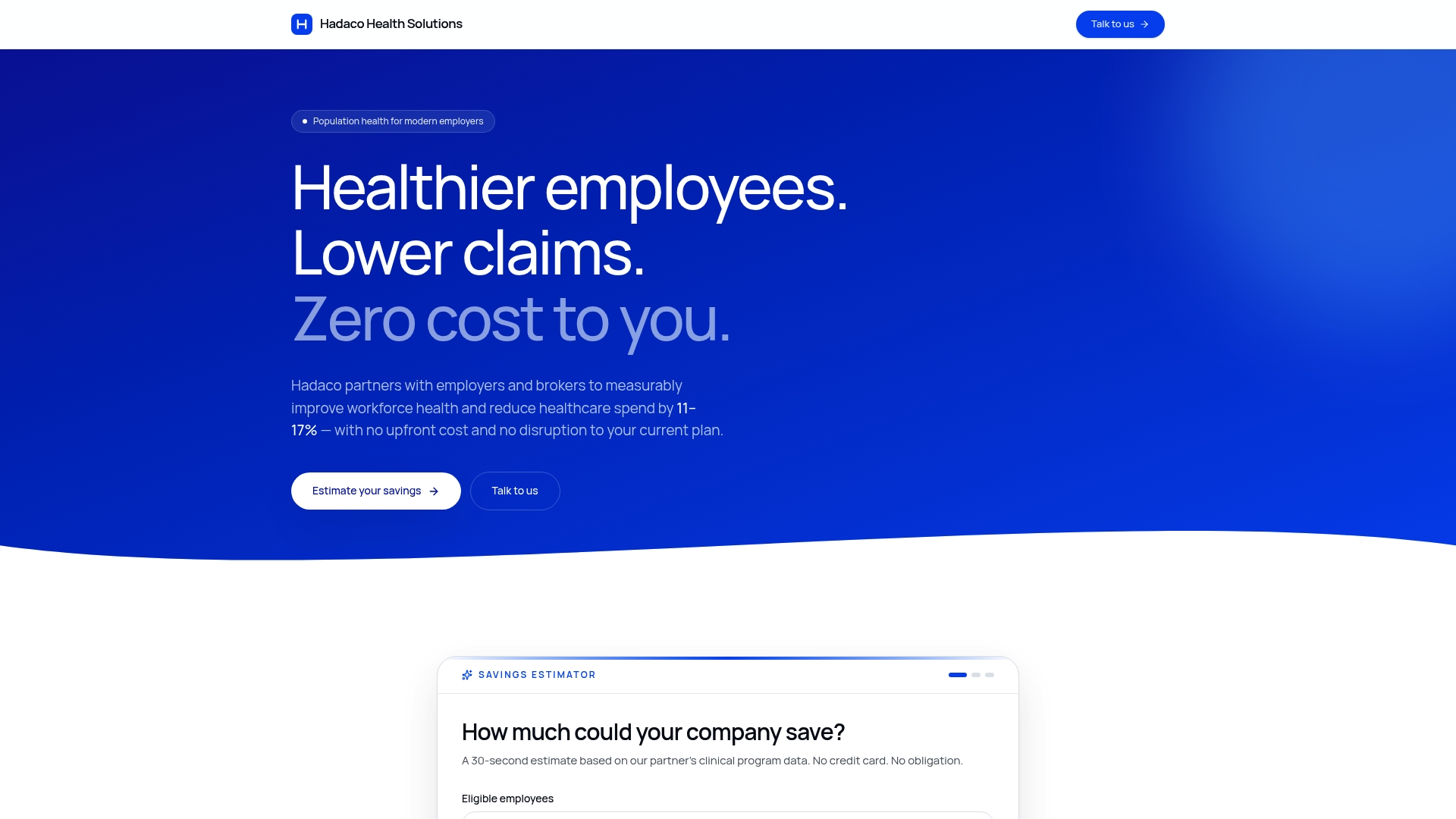
Hadaco integrates health risk assessment tools with evidence-based wellness programs, personalized health coaching, and quarterly reporting that shows employers exactly where their healthcare dollars are going. The platform complements your existing health plan rather than replacing it, and there are no upfront fees. Employers typically see measurable results in their first program year. If you want to see what that could mean for your organization's claims costs, the Hadaco savings estimator gives you a transparent, numbers-based projection before you commit to anything.
FAQ
What is an employee health risk assessment?
An employee health risk assessment is a confidential process combining a self-reported questionnaire with biometric screening to identify health risk factors across a workforce. The goal is to generate population-level data that informs targeted wellness programs and reduces long-term healthcare costs.
How long does an HRA take to complete?
The questionnaire portion takes 15–30 minutes, and at-home biometric screening adds under 30 minutes. Most employees can complete the full assessment in a single session.
Does HIPAA protect employee HRA data?
HIPAA sets the legal minimum for health data protection, but best-practice programs go further by using independent third-party administrators, encrypted storage, and aggregate-only reporting to employers. Individual results should never appear in personnel files.
How often should employers run health risk assessments?
Best practice calls for repeating HRAs every one to three years. Periodic assessments build the longitudinal baseline needed to track workforce health trends and measure the impact of wellness interventions over time.
What should happen after employees complete an HRA?
Every participant should receive personalized feedback within 48 hours, and employees with elevated risk scores should be connected to health coaching, Employee Assistance Programs, or occupational health follow-up. Assessment without follow-up produces no measurable behavior change.