
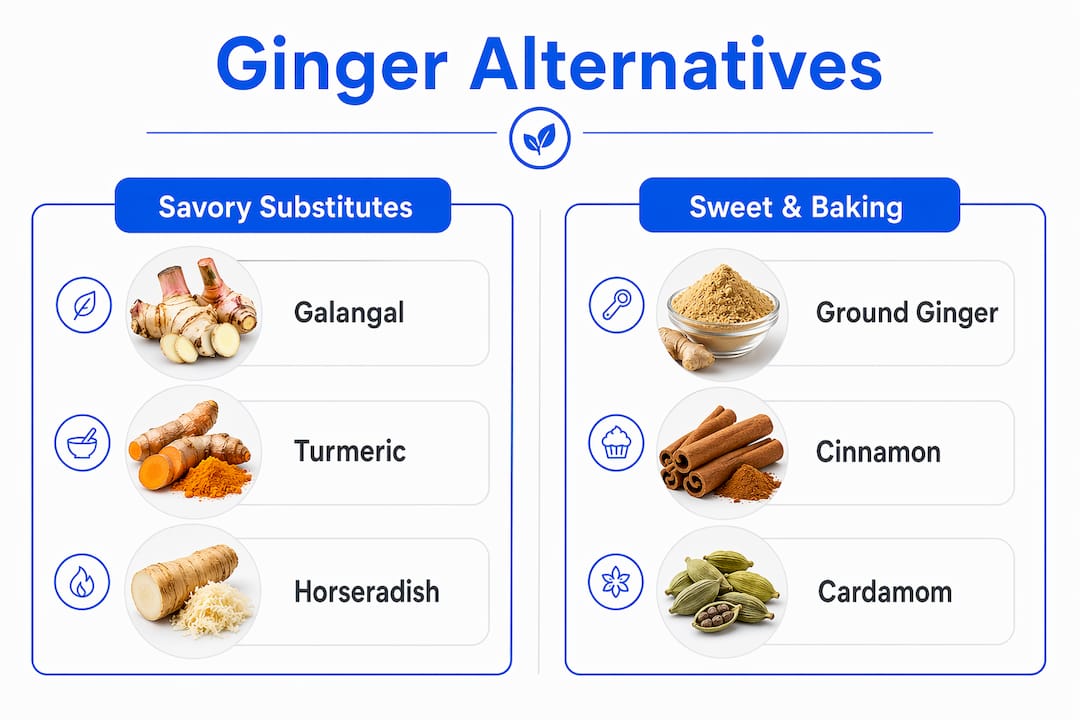
The best ginger alternatives are ground ginger, galangal, turmeric, allspice, cardamom, cinnamon, nutmeg, mace, horseradish, and wasabi. Each one fills a different gap depending on whether your dish is savory or sweet, and none of them taste exactly like ginger. That's the honest starting point.
Here's a quick orientation before you reach for the spice rack:
- Ground ginger: Best all-around swap; use ¼ to ½ teaspoon per tablespoon of fresh ginger
- Galangal: Closest rhizome match for savory Asian dishes; swap 1:1 for fresh ginger
- Turmeric: Earthy warmth for savory recipes; use 50% of the ginger amount
- Allspice: Sharp, warming; works 1:1 in baked goods and hearty stews
- Cardamom: Sweet, spicy, citrusy; start at half the ginger quantity
- Cinnamon: Sweet and woody; 1:1 in cakes, custards, and pies
- Nutmeg: Warm and peppery; 1:1 in baked goods
- Mace: Muted nutmeg; 1:1, slightly less sweet
- Horseradish: Fiery heat for savory dishes; use half the ginger amount
- Wasabi: Similar burn to horseradish; half the ginger amount in savory recipes
What are the best ginger alternatives and how do you use each one?
Choosing the right substitute comes down to one question: what is ginger doing in this recipe? Is it providing heat, aroma, or a sweet-spicy backbone? The answer shapes everything.
Ground ginger
Ground ginger is the most practical swap because it's literally the same plant in dried form. The catch is concentration. Use ¼ to ½ teaspoon of ground ginger for every tablespoon of fresh ginger called for. It works well in marinades, soups, and baked goods, but skip it in stir-fries where fresh ginger's texture matters.
Galangal
Galangal is the gold-standard substitute for fresh ginger in savory Thai and Southeast Asian cooking. It's a rhizome like ginger, and the two share enough flavor overlap to swap 1:1. The difference is that galangal carries piney, citrusy notes that ginger doesn't. Those notes actually complement lemongrass and coconut-based dishes beautifully. Avoid it in sweet baking entirely.
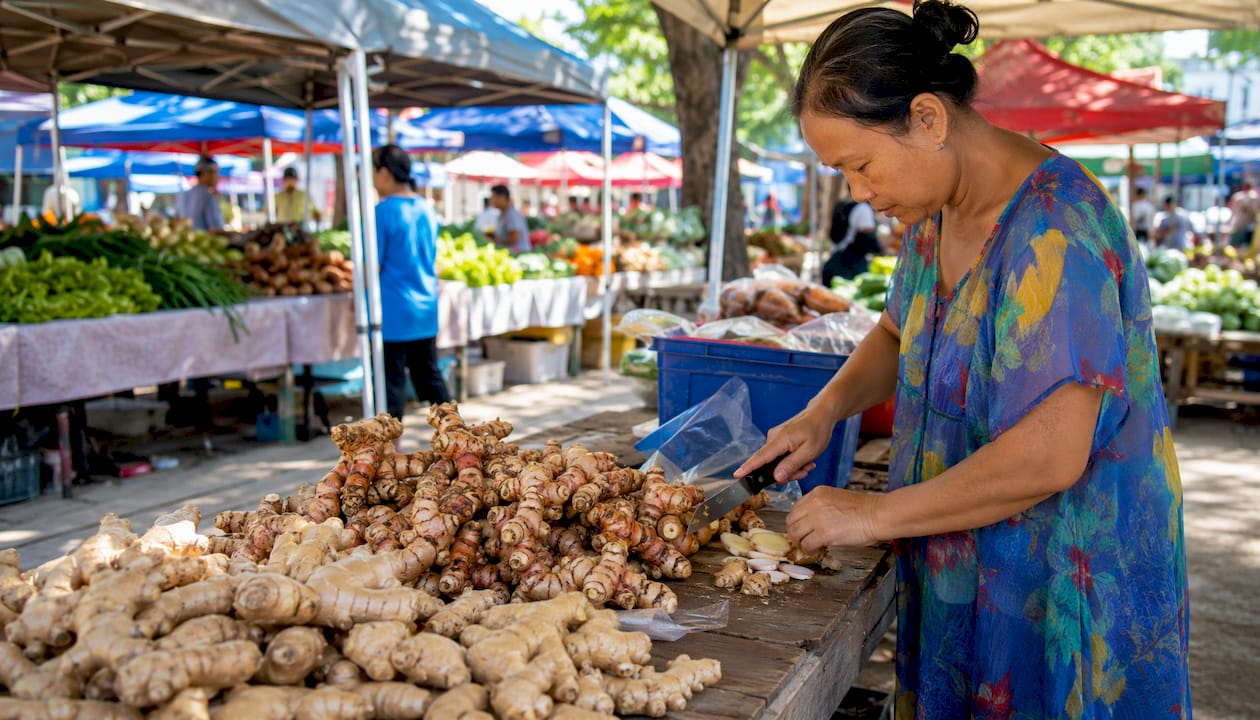
Sourcing note: Fresh galangal is rarely stocked at mainstream grocery stores. Asian grocery stores and specialty food markets are your best bet.
Turmeric
Turmeric shares the same botanical family as ginger (Zingiberaceae), which explains why it works as a substitute in savory dishes. It adds earthy warmth and a golden color, but it lacks ginger's brightness and has a slightly bitter edge. Use 50% of the ginger amount when substituting with turmeric. It's ideal in curries, rice dishes, and soups. Fresh turmeric is less bitter than ground and makes a closer match. You can read more about turmeric's properties if you're also interested in its health angle.
Allspice
Ground allspice delivers a sharp, warming flavor that works surprisingly well in both savory stews and sweet baked goods. It's a 1:1 substitute for ground ginger. Allspice shines in Jamaican beef stew, spiced cookies, and pumpkin-flavored recipes where ginger's role is mostly warmth and spice rather than brightness.
Cardamom
Cardamom brings sweet, spicy, and citrusy notes that echo ginger's profile more closely than most people expect. It's excellent in cakes, curries, and mulled wine. Because cardamom is potent, start with half the amount of ground cardamom compared to ginger and taste as you go.

Cinnamon
Cinnamon is the most familiar baking substitute. It's sweeter and earthier than ginger, but in custards, pies, and quick breads, it fills the warm-spice role without much adjustment. Use it 1:1 for ground ginger in baked goods.
Nutmeg
Nutmeg has a warm, spicy-sweet flavor with subtle clove-like notes that add a welcome pepperiness in place of ginger's heat. It's a 1:1 swap in baked goods. Use it sparingly since its flavor intensifies with heat.
Mace
Mace is the outer skin of the nutmeg seed. The flavor is similar but slightly muted, and it lacks nutmeg's subtle sweetness. It's a 1:1 substitute and works well when you want nutmeg's warmth without the full intensity. Blending mace with cinnamon or allspice gets you closer to ginger's complexity.
Horseradish
Horseradish mimics ginger's heat in savory recipes like carrot ginger soup or glazed salmon. It's sharper and hotter than ginger, so use half the amount and cut back on other heat sources like chili flakes by half as well.
Wasabi
Most commercial wasabi is made with horseradish, so the two behave similarly. Wasabi works in savory dishes where ginger's role is purely heat. Like horseradish, use half the ginger amount. It's not a baking substitute under any circumstances.
| Substitute | Ideal uses | Flavor profile | Substitution ratio | Notes |
|---|---|---|---|---|
| Ground ginger | Savory and sweet | Concentrated ginger warmth | ¼–½ tsp per 1 tbsp fresh | Avoid in stir-fries |
| Galangal | Savory Asian dishes | Piney, citrusy, mellow | 1:1 for fresh ginger | Hard to find; skip in sweet dishes |
| Turmeric | Savory | Earthy, warm, slightly bitter | 50% of ginger amount | Adds yellow color |
| Allspice | Savory and sweet | Sharp, warming | 1:1 | Great in stews and fall baking |
| Cardamom | Sweet and savory | Sweet, spicy, citrusy | Start at 50% | Potent; adjust carefully |
| Cinnamon | Sweet | Sweet, woody, warm | 1:1 | Best in baked goods |
| Nutmeg | Sweet | Warm, peppery, spicy-sweet | 1:1 | Use sparingly |
| Mace | Sweet | Muted nutmeg | 1:1 | Blend with cinnamon for complexity |
| Horseradish | Savory | Sharp, fiery heat | 50% of ginger amount | Reduce other heat sources |
| Wasabi | Savory | Sharp, sinus-clearing heat | 50% of ginger amount | Not for baking |
How to balance flavors when you're substituting ginger
The single biggest mistake home cooks make is swapping ginger 1:1 with a dry spice and wondering why the dish tastes flat. Ginger's "zing" is actually two things at once: warmth and bright acidity. Most dry substitutes deliver the warmth but miss the brightness. A small squeeze of lemon juice or a pinch of black pepper added at the end restores that lift.
A few practical rules:
- For pungent substitutes like horseradish, cardamom, or turmeric, always start conservative. You can add more; you can't take it back.
- For baking, blending spices gets you closer to ginger's layered flavor than any single substitute. Try cinnamon plus mace plus a touch of allspice.
- For savory dishes, consider whether the recipe also uses citrus or lemongrass. If it does, galangal slots in almost perfectly.
- Dry vs. fresh: Dry substitutes work in sauces, soups, and batters. Fresh galangal or fresh turmeric works better in dishes where texture and brightness matter.
Pro Tip: When a stir-fry recipe calls for fresh ginger and you have none, use ground allspice or cinnamon at a 1:1 ratio, then finish the dish with a squeeze of citrus or a pinch of black pepper. It won't be identical, but it will have the brightness that makes ginger dishes taste alive.
The choice of substitute should always reflect what ginger is doing in the recipe: heat, aroma, or sweetness. Wasabi in a pumpkin pie is a disaster. Allspice in a Thai curry is almost as bad. Match the substitute to the dish's flavor logic, not just the spice drawer.
Health benefits and dietary considerations worth knowing
Most of these substitutes bring genuine nutritional value, not just flavor. Turmeric contains curcumin, a compound widely studied for anti-inflammatory properties. Cardamom has been used in Ayurvedic medicine for digestive support. Cinnamon is associated with blood sugar regulation in several clinical contexts. You can explore the health properties of these spices in more depth if that's a priority for you.
A few dietary notes to keep in mind:
- Turmeric can interact with blood thinners at high doses; culinary amounts are generally safe.
- Horseradish and wasabi are not suitable for people with digestive sensitivity or acid reflux.
- Cardamom is well-tolerated but can cause issues in very large quantities.
- Candied ginger adds significant sugar; reduce other sweeteners in the recipe accordingly when using it as a sweet dish substitute.
What culinary experts say about ginger substitution
Ginger, cardamom, and turmeric all belong to the Zingiberaceae plant family. That shared lineage explains why cardamom and turmeric work as functional substitutes even though they taste different. The botanical connection is real, but it doesn't mean the flavors are interchangeable without adjustment.
Expert culinary guidance consistently points to a few principles:
- Context is everything. A substitute that works in a gingerbread cookie will ruin a Thai coconut soup.
- Galangal is the closest rhizome match for savory applications, but its piney notes make it unsuitable for sweet baking where ginger's unique sweet heat is the point.
- Blending warming spices (allspice, cinnamon, mace, nutmeg) produces more complexity than any single substitute. Start with equal parts and adjust.
- Flavor dimension matters. Ginger has both warmth and acidity. Substitutes that only provide warmth need a brightness fix, usually citrus or pepper.
The deeper insight is that no single spice replicates ginger exactly. The goal is to preserve the dish's intended flavor direction, not to clone the original ingredient.
Key Takeaways
The best ginger substitute depends entirely on the dish: galangal for savory Asian cooking, warming spice blends for baking, and horseradish or wasabi when heat is the only goal.
| Point | Details |
|---|---|
| Match substitute to dish type | Galangal suits savory Asian dishes; cinnamon, nutmeg, and allspice suit baking. |
| Adjust quantities carefully | Turmeric, cardamom, horseradish, and wasabi work best at 50% of the ginger amount. |
| Restore brightness with citrus | Dry substitutes miss ginger's acidity; a squeeze of citrus or black pepper fixes it. |
| Blend spices for complexity | Combining cinnamon, mace, and allspice gets closer to ginger's layered flavor than one spice alone. |
| Galangal is hardest to source | Find fresh galangal at Asian grocery stores; ground galangal is more widely available online. |
Hadaco helps employers build healthier workforces through evidence-based programs that reduce healthcare claim costs with no upfront fees. If your organization is looking to improve employee well-being and see measurable results, explore Hadaco's approach to population health.