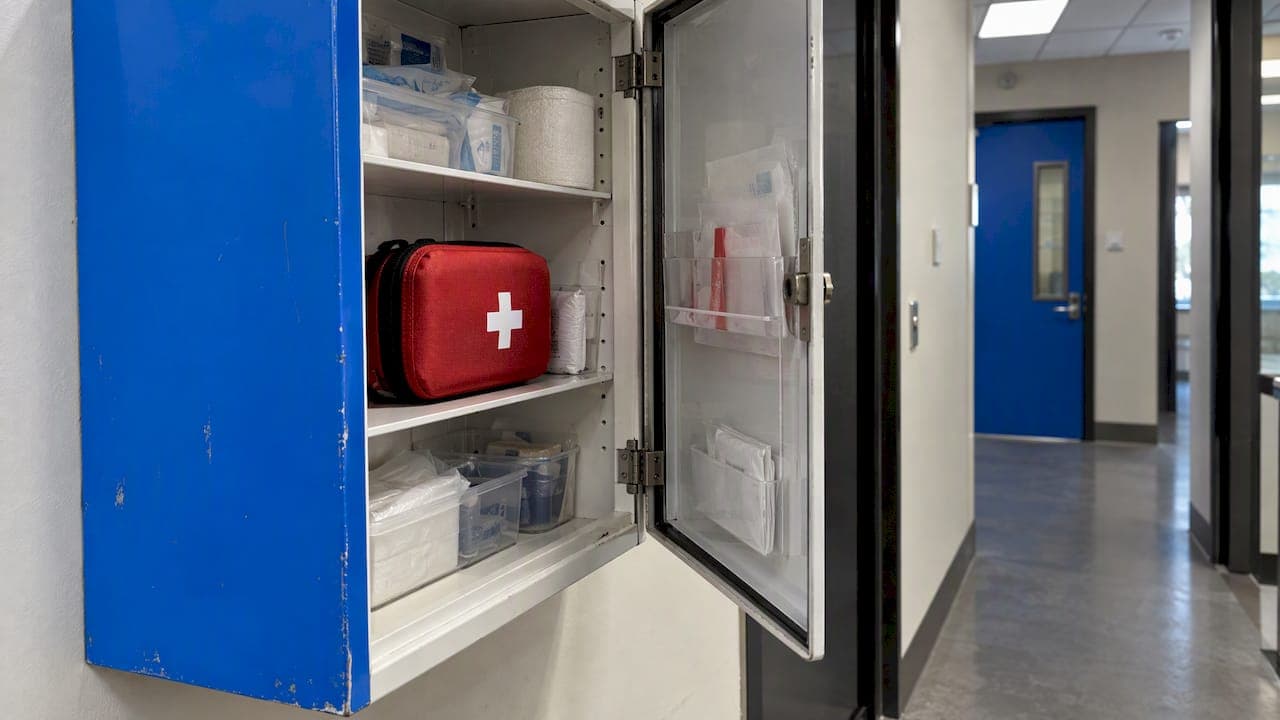
Opioids reach the workplace through two doors: a prescription after an injury, and use that starts or continues outside work and shows up on the job. Either way, employers carry the consequences in safety incidents, longer disability claims, absenteeism and turnover. The good news is that employers have real levers: clear policies, naloxone on site, careful handling of drug tests under the ADA, and benefits that catch pain and mental health problems early.
This guide is written for HR and benefits leaders, CFOs and the advisors who support them. It covers what the risk looks like in numbers, where it comes from, what to put in place, and where the legal lines are.
TL;DR
- Workplace overdose deaths in the U.S. rose 560% between 2011 and 2022, and most overdose deaths at work involve opioids.
- Workers with substance use disorders take nearly 50% more unscheduled leave and have 44% higher annual turnover, and replacing one worker costs about 21% of annual pay and benefits.
- The strongest employer moves are a recovery-ready policy, supervisor training, naloxone on site, and benefits that treat pain and mental health early.
- Under the ADA, opioid use disorder can call for reasonable accommodation, but current illegal drug use is not protected. A positive test from a lawful prescription needs a conversation first.
- Keep medical information confidential and separate from personnel files.
Table of Contents
- What opioids are and what opioid use disorder means
- How big the problem is in U.S. workplaces
- What it costs employers
- Where workplace exposure comes from
- What employers can do: a practical plan
- Drug testing, accommodations and the law
- A note on our perspective
- How Hadaco fits alongside your existing plans
- A first-90-days checklist
- FAQ
- Sources
What opioids are and what opioid use disorder means
Opioids are a family of drugs that reduce the perception of pain. MedlinePlus lists prescription pain relievers such as oxycodone, hydrocodone, fentanyl and tramadol, along with illegal heroin. A person can take a prescribed opioid exactly as directed, and that is a different situation from misuse or from a disorder.
Opioid use disorder (OUD) is a problematic pattern of use that causes distress and impairment and interferes with daily life. It is a medical condition, not a character flaw, and it responds to treatment. That framing matters for employers, because the policies that work treat it as a health issue with safety consequences, not only as a discipline issue.
Three situations get mixed up in workplace conversations, and they call for different responses:
- Lawful prescribed use. An employee recovering from surgery takes oxycodone as directed. The concern is impairment in a safety-sensitive role, handled through accommodation and a conversation.
- Misuse or developing OUD. Use beyond what was prescribed, or a pattern that is hurting the person's life. The response is support, access to treatment and clear safety expectations.
- Illegal drug use. Heroin, or illicit fentanyl and pills not prescribed to the person. Here the ADA gives less protection, which we cover below.
How big the problem is in U.S. workplaces
The clearest signal comes from fatality data. NIOSH reports that workplace overdose fatalities rose 560% from 2011 to 2022, from 0.05 to 0.33 per 100,000 workers. CDC also notes that in 2020, unintentional overdose from nonmedical drug use caused 388 worker deaths, a nearly 500% increase from 2012.

Those are the deaths. Behind each one are many more near misses, missed shifts and quiet struggles that never reach a statistic. A single death at work also hits a team hard, which is why many employers are now treating overdose response like any other emergency plan.
Preparedness is thin. In the Department of Labor's recovery-ready workplace materials, employers are encouraged to plan ahead, yet a survey summarized in search results on this topic found that only 19% of employees said naloxone was available at their workplace. Treat that as a reminder that most employers have not yet done the basics, and an easy place to stand out.
What it costs employers
The cost shows up in four places: safety, attendance, turnover and claims.
Safety and performance
The National Safety Council says opioids can impair thinking and lead to serious errors at work, and that opioid use disorders are associated with increased absenteeism, reduced productivity and costs to employers. In roles involving driving, machinery, heights or patient care, one lapse can be serious.
Attendance and turnover
The Department of Labor reports that workers with substance use disorders take nearly 50% more days of unscheduled leave and have a 44% higher annual turnover rate than the average U.S. workforce. The same page puts the cost of recruiting and training a replacement at roughly 21% of that employee's annual salary and benefits.
A quick worked example: for an employee with $80,000 in annual salary and benefits, 21% is $16,800 to replace one person. Lose five people a year to a preventable cycle of untreated pain or addiction and that is $84,000, before counting lost knowledge and overtime for coworkers.
Workers' compensation and disability
NIOSH data show that in 2022, 32% of workers' compensation claims with prescriptions in 39 states and DC had at least one opioid prescription, down from 55% in 2012. That is progress, but the same page shows why it matters: for low back injuries causing more than 7 days away from work, longer-term opioid prescriptions were associated with temporary disability more than three times longer than claims without opioid prescriptions.
That finding runs against the common assumption that opioids get people back to work faster. In many cases the opposite holds, so an employer that pushes for earlier, non-opioid pain pathways is protecting both the employee and the claim.
The upside of recovery
The cost story has a hopeful side. The NSC notes that employees in recovery are less likely to miss work days, be hospitalized or have doctor visits than their peers, and have lower turnover. Keeping a trained person who is in treatment is often better business than replacing them.
Where workplace exposure comes from
CDC identifies work-related injuries, chronic medical conditions and over-prescription of pain relievers in workers' compensation and health plans as workplace-linked contributors to opioid misuse. In practice, the pathways look like this:
| Pathway | What it looks like | Where the employer can act |
|---|---|---|
| Injury and acute pain | Strain, fracture or surgery leads to an opioid prescription and a long absence | Workers' comp and medical management, early non-opioid pain options, return-to-work planning |
| Chronic conditions | Back pain, arthritis or other long-term pain managed with repeated prescriptions | Benefit design, care navigation, chronic condition programs |
| Untreated mental health | Stress, depression or trauma drive self-medication | Mental health access, manager training, leave flexibility |
| Stigma and secrecy | The person hides use because disclosure feels risky | Confidential, supportive policy and clear communication |
The pattern here is that opioid risk rarely stands alone. It tangles with pain, mental health and chronic illness, which is why isolated one-off campaigns tend to underperform compared with a broader approach to employee health. Our guide to cutting workplace chronic disease costs covers that wider picture, and our piece on suicide prevention in the workplace addresses a closely linked risk.
What employers can do: a practical plan
The Department of Labor's Recovery-Ready Workplace toolkit and CDC guidance point to the same core steps: adopt recovery-ready policies, train people to recognize signs of overdose, and keep naloxone on site. CDC adds that recovery-ready policies can reduce absenteeism, healthcare costs and turnover while raising morale and engagement.
Here is how to turn that into a sequence.
Step 1: Write a policy that treats this as health and safety
A good policy states plainly what is expected on the job (no impairment in safety-sensitive work), what support exists (leave, treatment access, accommodations), and what protections apply (confidentiality, no retaliation for asking for help). Have employment counsel review it, since state laws on testing and cannabis, leave and disclosure vary.
Keep the language human. Employees will only come forward if the document sounds like it was written to help them.
Step 2: Train supervisors on what to see and what to say
Supervisors are not clinicians and should not diagnose. Train them to document observable performance and safety concerns, to start a private conversation about those observations, and to point to the employee assistance program and benefits. Just as important, train them on what not to do: no speculating about diagnoses, no sharing details with the team.
Step 3: Put naloxone and an emergency plan in place
Naloxone can reverse an opioid overdose. CDC's workplace guidance notes that 46 states had civil liability protections for laypeople who administer naloxone as of 2017. Check your state's current rules with counsel before you roll out a program.
A basic response plan covers:
- Where the naloxone is stored and who checks expiry dates
- Who is trained to recognize an overdose and administer it
- Calling 911 every time, since naloxone can wear off before the opioid does
- Who notifies family, and how the team is supported afterward
Step 4: Make treatment easy to reach
The DOL toolkit recommends offering medical leave, flexible scheduling for treatment and reasonable accommodations for employees with OUD. Flexible hours so someone can attend a clinic visit may cost little and keep a trained employee in the job. The Department of Labor's workforce research also holds that the workforce system should not treat receipt of medication-assisted treatment as a disqualifier for employment, a good principle for hiring and return-to-work decisions as well.
Check how your health plan covers behavioral health, medication for OUD and non-opioid pain care, and whether employees can actually find an in-network provider with openings. Coverage on paper does not help if the wait is two months.
Step 5: Reduce the pain pipeline
Because injuries and chronic pain feed opioid exposure, ask your workers' comp carrier, pharmacy benefit manager and health plan three questions:
- What share of our claims involve long-term opioid prescriptions?
- What non-opioid options (physical therapy, other medications, behavioral approaches) are offered early?
- How are high-risk prescribing patterns flagged and who follows up?
You are looking for answers with numbers, not reassurance.
Step 6: Measure and report
Track what you can without singling out individuals: aggregate claims trends, EAP use, time away after injury, turnover in roles with high injury rates, and training completion. Review quarterly. What gets reported to leadership gets funded.
Drug testing, accommodations and the law
This is where employers most often stumble. The following is general information for planning, not legal advice; confirm specifics with employment counsel and your state's rules.
Accommodation. Under the ADA, the EEOC says employers must provide reasonable accommodations for OUD unless doing so would impose significant difficulty or expense. The DOL toolkit lists examples such as schedule flexibility for treatment or temporary reassignment from safety-sensitive duties.
Illegal use is different. The EEOC explains that the ADA does not protect people currently engaging in the illegal use of drugs, so an employer may take employment action based on that use. A person in treatment or in recovery may still have protection. The distinction between current illegal use and lawful prescribed medication is the key one when evaluating an applicant or employee.
Positive tests from prescriptions. When an employee tests positive for an opioid they take lawfully, EEOC guidance says the employer should give the employee a chance to explain the result before taking action. Build that step into your testing procedure, with a medical review process where appropriate.
Safety-sensitive roles. Employers can insist on safety standards. The approach that holds up is to focus on whether the person can do the job safely, rely on objective evidence, and consider accommodations such as temporary reassignment before termination.
Confidentiality. Medical information must be kept confidential under the ADA. Store it separately from personnel files, share it only with those who need it to carry out an accommodation, and train supervisors never to discuss it with coworkers.
A note on our perspective
We work with employers on population health, and opioids rarely arrive as a standalone problem. They show up as a back injury that never quite resolves, a spike in anxiety claims, a valued supervisor who has started missing Mondays. Employers who treat each of these as a separate headache end up paying for all of them.
Our view is that the employer's job is not to police the individual but to build a system where problems are caught early and care is easy to reach. That means clear policy, but also benefits that work together: chronic condition support, mental health access, preventive care and an engagement approach that employees actually trust. It also means measuring results. If a program cannot show quarterly movement in claims and engagement, it is a gesture, not a strategy.
We also think cost and compassion point the same way here. Recovery-ready practices reduce turnover and absence at the same time as they give people a path back to health. You do not have to choose.
— Gene
How Hadaco fits alongside your existing plans
Hadaco provides population health programs for employers, covering chronic disease, preventive care, mental health and employee engagement. The programs integrate with your current benefit plans without disruption, and are provided with no upfront fees. Our fees are performance-based, contingent on demonstrated healthcare savings and engagement outcomes.
Employers typically come to us wanting healthier claims without replacing their carrier or plan design. You get a savings estimator to see what is realistic for your population before committing, and quarterly reporting so outcomes are visible. In their first year, companies often see average savings of $451 per employee. For benefit consultants, we support brokers as well as employers.
If you want to see how a population health program could sit beside your opioid and recovery-ready policies, book a consultation on our population health page. For related reading, see how wellness programs reduce employee healthcare costs and our tobacco cessation playbook, which uses a similar structure for a different risk.
A first-90-days checklist
If you are starting from zero, this order works for most mid-sized employers.
Days 1 to 30: Assess
- Review claims and workers' comp data with your carrier for opioid prescribing patterns
- Read your current drug-free workplace and testing policies against ADA guidance
- Confirm what behavioral health and OUD treatment your plan covers, and how long the wait is
Days 31 to 60: Build
- Draft or update the recovery-ready policy with counsel
- Choose a naloxone approach and an emergency response plan
- Schedule supervisor training
Days 61 to 90: Launch and measure
- Communicate the policy and where to get help, in plain language, through more than one channel
- Train responders and supervisors
- Set the metrics you will review each quarter
Small employers can scale this down: the policy, naloxone and a trusted route to the EAP or a treatment navigator will cover most of the value.
FAQ
Can an employer fire someone for a positive opioid test?
It depends on the facts and your state's law. If the opioid was lawfully prescribed, EEOC guidance says to let the employee explain the result before acting. The ADA does not protect current illegal drug use, so a positive result from non-prescribed use can support action, but check with employment counsel first.
Do employers have to accommodate opioid use disorder?
Generally yes, under the ADA, unless the accommodation would cause significant difficulty or expense. Examples include schedule flexibility for treatment or temporary reassignment from safety-sensitive tasks. Protection applies to people in treatment or recovery, not to current illegal use.
Should every workplace keep naloxone on site?
Federal guidance from CDC and the Department of Labor recommends it as part of a workplace overdose response, along with training and a plan to call 911. Rules on liability and distribution vary by state, so confirm local requirements before you launch.
How do opioids affect workers' compensation claims?
Opioid prescriptions appear in a large share of claims with prescriptions, and NIOSH links longer-term prescribing for low back injuries to much longer temporary disability. Reviewing prescribing patterns with your carrier and promoting early non-opioid pain care can shorten claims.
How can HR spot an overdose risk without diagnosing anyone?
You should not diagnose. Supervisors can document observable performance and safety concerns, speak privately, and point to the EAP and benefits. In an emergency, train staff to recognize signs of overdose and call 911 immediately.
Sources
- Opioids and Opioid Use Disorder (OUD): MedlinePlus
- Implications of Drug Use for Employers: National Safety Council
- Benefits of Recovery-Ready Workplace Policies: U.S. Department of Labor
- Opioids and Workers' Compensation: CDC NIOSH
- Opioids: Substance Use and Work: CDC NIOSH
- Suicides and Overdoses at Work: Census of Fatal Occupational Injuries, NIOSH
- ONDCP Launches New Recovery Ready Workplace Toolkit: NIOSH
- Recovery-Ready Workplace Toolkit: U.S. Department of Labor
- Using Naloxone to Reverse Opioid Overdose in the Workplace: CDC
- The Role of the Workforce System in Addressing the Opioid Crisis: U.S. Department of Labor
- How Health Care Providers Can Help Current and Former Patients Who Have Used Opioids: EEOC
- Use of Codeine, Oxycodone, and Other Opioids: Information for Employees: EEOC