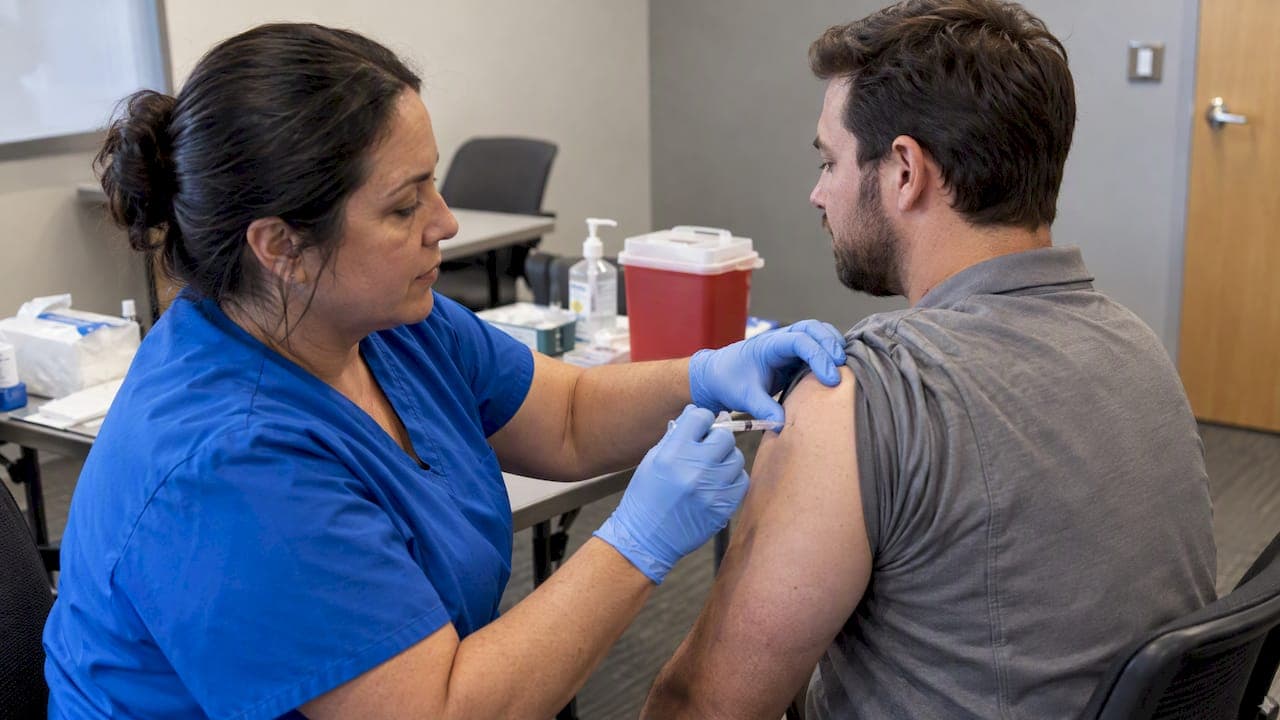
Yes, offer a workplace vaccination clinic when it is practical for your site. Start by choosing a provider model, naming a planning team, locking down a vaccine cold-chain plan, and mapping your communications, all aligned with CDC clinic guidance and OSHA requirements. We at Hadaco also help employers fold clinics into measurable population-health programs, so the work compounds beyond a single event.
TL;DR:
- Workplace influenza programs average about 42% participation, but reported results range from 5.7% to 88.9%; leadership support, active promotion, and flexible access improve turnout.
- Choose a clinic provider based on headcount, distance between sites, repeat dose needs, and HR capacity; larger programs require more setup time.
- Require written storage procedures, digital temperature logs, lot and expiration tracking, and a named responder; freezing can permanently damage vaccines containing aluminum adjuvant.
- OSHA requires a free hepatitis B series within 10 working days of assignment, after training, for staff with occupational exposure; employers must protect privacy and accommodate qualifying requests.
- Pair leadership endorsements and multichannel reminders with vaccination during work hours, walk in access, and a registration link beside the clinic details.
Table of Contents
- Why offer a workplace vaccination clinic: evidence and expected outcomes
- Who provides on-site clinics and which model fits your organization
- Operational checklist: before, during, and after the clinic
- Vaccine storage, handling, and patient-safety essentials
- Legal, regulatory, and privacy basics HR must follow
- How to design communications and incentives that increase employee participation
- Timeline and cost considerations: planning windows and key cost drivers
- Documentation, reporting, and post-clinic evaluation
- Why clinics work best inside a larger population-health program
- Another option: our population-health approach to complement on-site clinics
- FAQ
- Sources
Why offer a workplace vaccination clinic: evidence and expected outcomes
Expect real variation in turnout. A systematic review and meta-analysis of workplace campaigns, mostly influenza, found widely variable uptake. It still concluded that free on-site vaccination is a successful tool for improving adherence, and that active promotion raises participation.

CDC's workplace guidance, drawing on pooled study data, puts average influenza program participation at about 42%, with individual programs ranging from 5.7% to 88.9%. That spread is the point: your design choices decide where you land.
What employers typically gain:
- Fewer sick days when more of the workforce is protected.
- Better productivity during peak respiratory season.
- Potential health-cost offsets from avoided illness.
- Convenience, since people vaccinate without leaving work.
Infection control experts cited in CDC's guidance say the strongest programs combine visible leadership support, proactive communication, and flexible access, such as vaccinating during work hours. Those three levers matter more than the vaccine brand or the vendor logo on the banner.
Who provides on-site clinics and which model fits your organization
You have four common routes, and the right one depends mostly on size and complexity:
- Retail pharmacy partners: strong on scale and scheduling tools, a good fit for single-site employers who want a predictable event.
- Mobile clinic vendors: they bring staff and supplies to your location, which suits distributed sites or tight floor space.
- In-house occupational health: the most control and the best integration with your existing health records, at the cost of more administrative load.
- Local health department partnerships: useful for community ties and sometimes for vaccine access, though availability varies by jurisdiction.
Four cues narrow the choice quickly. Consider headcount, whether you need multi-dose series that require return visits, how far apart your sites are, and how much administrative capacity your HR team really has. A mixed-methods study of a workplace program in Germany noted that on-site clinics demand significant organizational effort, so be honest about your bandwidth before you pick a model.
When you compare vendors, ask about clinical staffing, cold-chain procedures, documentation workflow, and how they handle adverse reactions. Those answers separate polished sales decks from dependable operators.
Operational checklist: before, during, and after the clinic
CDC's running-a-clinic guidance is the backbone here. Work through it in this order:
- Form a planning committee and name a clinical lead with clear responsibilities.
- Secure vaccine orders and standing orders if your provider needs them.
- Plan the cold chain, including digital temperature logging.
- Set scheduling: appointments, walk-ins, or a mix, with accessible space and translation support.
- Prepare consent and screening so every recipient is checked before the dose.
- Run patient flow with infection control in mind. Per CDC administration practices, use hand hygiene, clean medication areas, single-use syringes, and safe sharps disposal. Draw up doses only immediately before administering.
- Staff an observation area and a clear emergency response.
- Record lot numbers and expiration dates for every dose.
- After the event, enter doses in your immunization information system (IIS), dispose of sharps properly, review temperature logs and inventory, and write an after-action report.
Pro Tip: Do a walkthrough of the room with your provider the day before, tracing one employee's path from check-in to observation. Bottlenecks show up during a walkthrough, not in a planning meeting.
Vaccine storage, handling, and patient-safety essentials
Whatever provider you choose, require written cold-chain procedures. CDC's storage and handling guidance states that many vaccines belong in a refrigerator at 2°C to 8°C (36°F to 46°F), and that failing to follow manufacturer and storage specifications can reduce potency.

Freezing can permanently damage aluminum-adjuvanted vaccines, which is why an unnoticed temperature excursion can turn a full clinic's supply into waste.
Make these non-negotiable in your vendor agreement:
- Clear labeling, with lot and expiration tracking for every vial.
- A digital data logger, plus a named person who checks it and acts immediately on any excursion.
- Strict adherence to manufacturer rules on reconstitution and drawing up doses, including discard windows.
- A plan to consult public health authorities or the manufacturer whenever a vaccine has been exposed to improper conditions.
You are not expected to run the cold chain yourself. You are expected to verify that someone competent does.
Legal, regulatory, and privacy basics HR must follow
Two agencies shape most of your obligations. Under OSHA's Bloodborne Pathogens standard, you must offer the hepatitis B vaccination series at no cost to employees with occupational exposure, within 10 working days of initial assignment after training. OSHA's fact sheet adds that you must provide training, obtain a written opinion from a licensed healthcare professional when indicated, and keep declination records.
On the EEOC side, its COVID-19 technical assistance says federal EEO laws generally allow employers to require vaccination, provided they meet ADA and Title VII reasonable accommodation requirements and keep vaccination information confidential.
Practical steps:
- Limit access to vaccination and medical records to need-to-know staff. Learn more about telehealth privacy risks and patient protection steps.
- Collect written declinations where appropriate.
- Follow a documented accommodation process for medical and religious requests.
- Have legal or benefits counsel review policy language. Our guide to workplace vaccination policy covers the drafting side, and our piece on HIPAA and wellness programs covers privacy.
How to design communications and incentives that increase employee participation
Turnout is a communications problem as much as a logistics one. Use several channels at once and keep every message easy to act on:
- Open with a visible endorsement from senior leadership.
- Combine email, posters, and SMS reminders with a short FAQ that answers common myths.
- Hold a pre-clinic Q&A with the clinical lead so hesitant employees can ask real questions.
- Offer on-shift time, a mix of appointment and walk-in slots, and paid leave for vaccination and brief recovery.
- Use low-cost incentives or recognition, never pressure.
Pro Tip: Put the sign-up link in the same message as the date and location. Every extra click costs you attendees.
If a seasonal flu event is your goal, our flu vaccination program guide walks through employee messaging in more detail.
Timeline and cost considerations: planning windows and key cost drivers
A small clinic can come together in a few weeks, but allow enough time to line up vendors, staffing, and communications. Multi-site or large-scale programs need longer. The academic best-practice study of large employee clinics points to multidisciplinary leadership, staffing models, IT scheduling, and financial-readiness planning as the foundations for scaling.
Budget around these cost drivers:
- Clinical staff labor and provider administration fees.
- The vaccine payment model, whether billed to insurance or paid directly.
- Scheduling and IT tools.
- Supplies and medical waste disposal.
- Offsets such as reduced absenteeism or avoided claims.
Use the study's cost cues as a starting frame for per-dose delivery estimates, then replace them with your vendor's actual quotes.
Documentation, reporting, and post-clinic evaluation
Good records protect employees and make the next clinic easier. Following CDC's clinic guidance:
- Enter administered vaccines in your jurisdiction's IIS whenever possible, and store medical records securely with access limited to those who need it.
- Report adverse events to VAERS when appropriate, and keep observation logs. Observation periods run 15 to 30 minutes depending on vaccine guidance.
- Write an after-action report within a short window of the event, covering reconciliation of doses and supplies, what slowed the line, and recommendations for the next clinic.
Treat that report as a working document. Clinics that skip it repeat the same mistakes next season.
Why clinics work best inside a larger population-health program
Here is our editorial view: a clinic is a strong tactic but a weak strategy on its own. A single event vaccinates one cohort on one day. Employer costs, though, are driven by chronic disease, missed preventive care, and low engagement all year long. Clinics earn their keep when they sit beside ongoing preventive programs, and when you can measure what changed, through savings estimates and regular outcome reporting rather than a one-time headcount. Pair every clinic with something that continues after the tables are folded.
— Gene
Another option: our population-health approach to complement on-site clinics
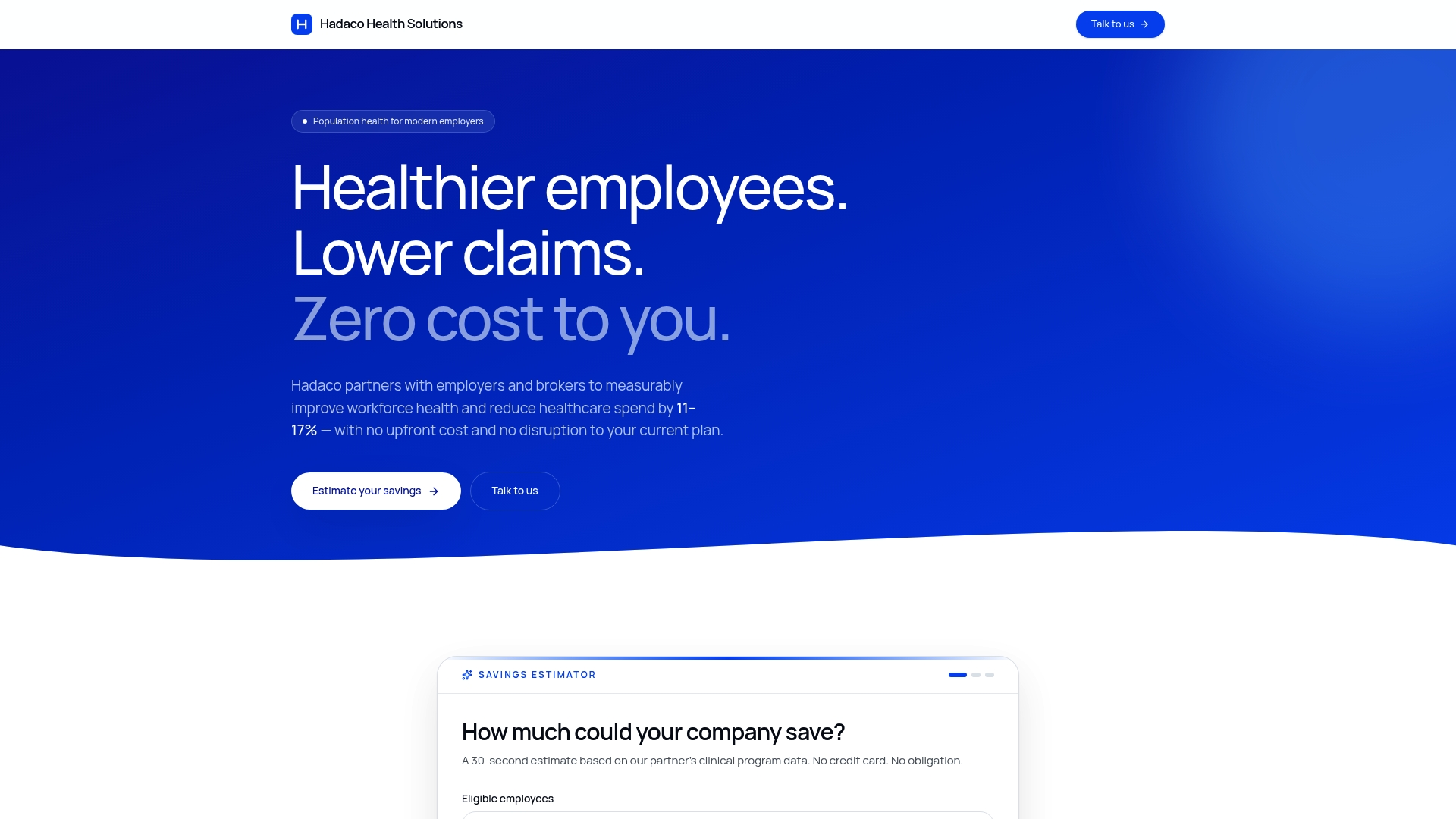
We built our programs to sit alongside your existing benefit plans, not replace them. Vaccination events fit naturally into what we do:
- Evidence-based programs covering chronic disease, preventive care, and employee engagement.
- A transparent savings estimator so you can see projected results before committing.
- Quarterly outcome reporting, with no upfront fees.
If you want a clinic to feed a measurable health strategy, book a consultation with us at Hadaco and we will map it out together.
FAQ
What vaccinations are required for work?
Requirements depend on the job and the employer. OSHA requires employers to offer hepatitis B vaccination, at no cost, to employees with occupational exposure to blood or other infectious materials. Beyond that, employers may set their own policies within ADA and Title VII accommodation rules.
How do you encourage employees to get the flu shot?
Make it easy and visible. Offer vaccination during work hours, get leadership to endorse it, and send reminders through several channels. CDC-cited workplace guidance shows free on-site access and active promotion raise participation.
Can an employer require vaccination?
Often yes, but with conditions. EEOC guidance says employers generally may require vaccination if they provide reasonable accommodations under the ADA and Title VII and keep vaccination information confidential. Have counsel review your policy before rollout.
How long does it take to set up a workplace vaccination clinic?
A small clinic can be organized in a few weeks. Most employers should allow enough time to coordinate the provider, staffing, supplies, and communications. Multi-site programs take longer.
Sources
- Promoting Vaccination in the Workplace | CDC
- Running a Vaccination Clinic | Vaccines & Immunizations | CDC
- EEOC Issues Updated COVID-19 Technical Assistance | U.S. Equal Employment Opportunity Commission