
Stand up a cross-functional wellness council, run a population risk scan, and launch a single-front-door care navigation pilot within 90 days. That sequence, grounded in NIOSH Total Worker Health® principles and the CDC Workplace Health Model, is how you integrate wellness benefits in a way that actually holds. Not a wellness fair. Not a meditation app bolted onto a carrier portal. A governed, measured system that maps your workforce's top health risks to specific interventions and tracks the business impact quarterly.
Here is your immediate checklist:
- Secure an executive sponsor (CFO or CHRO) who owns the business case and can unblock budget.
- Form a cross-functional council with HR, Benefits, EHS/Safety, Finance, and at least one frontline operations leader.
- Pull a rapid population risk scan using medical/pharmacy claims, absence data, and short-term disability trends.
- Audit your current vendor stack for integration gaps: SSO, API data feeds, and reporting fidelity.
- Design a 90-day pilot around your top one or two clinical risks, with pre-defined success criteria before launch day.
- Book a discovery conversation with Hadaco to model your year-one savings potential before committing to a vendor contract.
Pro Tip: Present the business case to your executive sponsor using productivity and turnover cost data, not just medical spend. Replacing a mid-level employee costs roughly one-half to two times their annual salary. Wellness ROI looks very different when you add that line.
Key Takeaways
Integrating wellness benefits requires governed, evidence-based program design tied to population risk data, measured quarterly, and scaled from a defined pilot rather than launched organization-wide from day one.
| Point | Details |
|---|---|
| Start with a risk scan | Pull claims, absence, and survey data to identify your top two or three clinical risks before designing any program. |
| Govern it like a business system | A cross-functional council with quarterly reviews keeps the program accountable and prevents point-solution sprawl. |
| Pilot before scaling | Launch a 90-day pilot with pre-defined success criteria; 35% enrollment and 70% clinical engagement are reasonable thresholds. |
| Measure five dimensions | Track participation, risk shift, utilization, absence, and cost together. No single metric tells the full story. |
| Hadaco as your pilot partner | Hadaco's no-upfront-fee, performance-based model averages $451 in savings per employee in year one, integrated with your existing benefits. |
Table of Contents
- How do you assess employee health needs before integrating wellness?
- How do you design a wellness strategy that maps needs to interventions?
- What does an integrated wellness benefits program actually include?
- How do you integrate wellness with core health benefits and care navigation?
- What governance structure keeps integrated wellness on track?
- How do you measure the ROI of integrated wellness programs?
- What does the implementation roadmap look like from day one to year one?
- How do you drive participation and keep employees engaged?
- What should you check before connecting a wellness vendor to your data?
- What are the most common mistakes when integrating wellness benefits?
- How Hadaco implements integrated wellness for employers
- What HR leaders get wrong about the business case for wellness
- Authoritative resources for HR teams
- Hadaco: a performance-based path to integrated wellness
- Sources
How do you assess employee health needs before integrating wellness?
The most common mistake HR teams make is designing a program before they know what their population actually needs. A risk scan takes two to four weeks and pays for itself in avoided spend on low-impact interventions.
Data sources to pull first:
- Medical and pharmacy claims (top diagnostic categories, high-cost claimants, ER utilization rate)
- Absence and leave records (frequency, duration, reason codes)
- Short-term disability and workers' compensation filings
- HRIS demographics (age bands, tenure, job family, location)
- Engagement survey results and voluntary turnover by department
- Manager interviews on workload, scheduling stress, and team health patterns
Once you have those inputs, prioritize by prevalence and cost. Mental health trends showing up in EAP utilization and leave data point to a different intervention set.
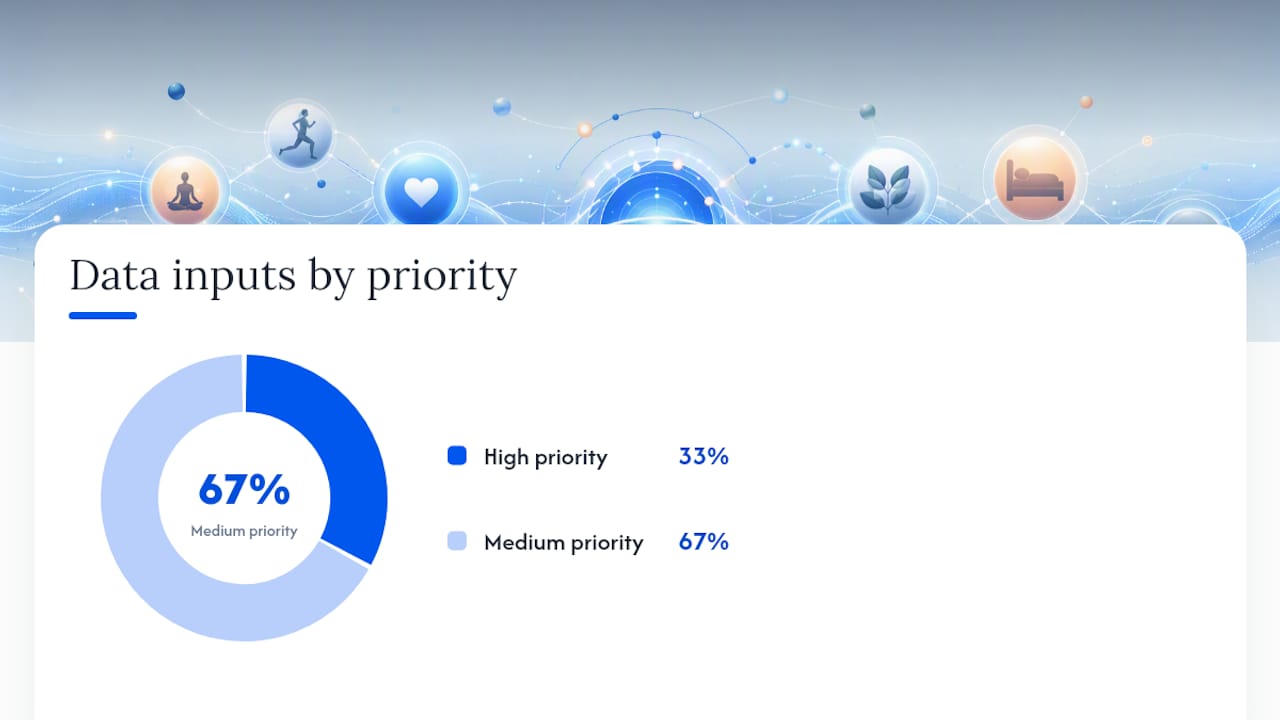
| Data Input | What It Reveals | Priority Signal |
|---|---|---|
| Medical/pharmacy claims | Top clinical categories, chronic disease burden | High |
| Absence and leave records | Burnout, chronic illness, work-design stress | High |
| Short-term disability | Severity and duration of health-driven absences | Medium |
| Engagement survey | Psychological safety, manager quality, workload | Medium |
| HRIS demographics | Age-related risk stratification, location gaps | Medium |
| Workers' comp filings | Ergonomic and safety risks | Medium |
Pro Tip: If your organization is self-insured with fewer than 500 employees and claims data is thin, run a 10-question health interest survey plus structured interviews with five to eight managers. You will surface the top two or three risk themes in under two weeks, enough to design a targeted pilot.
How do you design a wellness strategy that maps needs to interventions?
Assessment findings are only useful when they drive specific program decisions. The framework is straightforward: match each top population risk to a clinical intervention, a benefits design lever, and a measurable outcome.
Fractured benefits, where employees navigate separate portals for EAP, telehealth, and disease management, increase administrative burden and reduce your ability to identify trends. Consolidation is not just a user experience improvement. It is a data quality improvement.
| Population Risk | Intervention | Benefits Design Lever | Primary Metric |
|---|---|---|---|
| Prediabetes / obesity | NDPP referral + care navigation | Waived cost-sharing for NDPP | HbA1c trend, program completion rate |
| Musculoskeletal conditions | Ergonomic assessment + physical therapy navigation | PT coverage with no prior auth | Absence days, modified duty rate |
| Mental health / burnout | EAP upgrade + virtual behavioral health | Parity-compliant behavioral benefit | EAP utilization, leave frequency |
| Cardiovascular risk | Hypertension management program | Preventive medication coverage | Blood pressure readings, ER visits |
| Financial stress | Financial wellness coaching | Voluntary benefit additions | Survey stress scores |
Prioritization checklist before finalizing your program design:
- Clinical impact: does evidence support meaningful risk reduction for this condition?
- Population reach: what percentage of your workforce is affected?
- Ease of integration: can this connect to your existing carrier or benefits platform?
- Cost per engaged employee: is the unit economics defensible to Finance?
- Measurement feasibility: can you track outcomes within 12 months?
What does an integrated wellness benefits program actually include?
The SHRM toolkit on wellness program design is clear: health and well-being benefits remain central to employer competitiveness, and program design drives utilization more than budget size. The component set below reflects what evidence-backed programs consistently include.
Core components:
- One-front-door care navigation: a single access point (phone, app, or web portal) that routes employees to the right resource the first time, whether that is primary care, behavioral health, or a disease management program.
- Evidence-based prevention: National Diabetes Prevention Program (NDPP) referrals, tobacco cessation, age-appropriate screenings, and vaccination support.
- Virtual and in-person behavioral health: EAP with real clinical access, not just three sessions and a referral list. Parity with medical benefits matters here.
- Chronic disease management: structured programs for diabetes, hypertension, and musculoskeletal conditions, ideally with care coordinator support.
- Manager and supervisor training: brief modules on recognizing distress, routing employees to resources, and modeling healthy work habits.
- Ergonomic and work-design interventions: schedule flexibility, workload review, and physical environment improvements. This is the piece most programs skip.
- Financial wellness: coaching, debt management tools, and emergency savings support. Financial wellness programs reduce stress-driven absenteeism and improve engagement scores.
The CDC Workplace Health Model recommends coordinated, systematic programs precisely because ad hoc activities do not sustain behavior change. And NIOSH Total Worker Health® research shows that pairing job-condition improvements with health promotion outperforms either approach alone.
Key finding: RAND's national employer wellness study found that lifestyle components reduce health risks and disease management components can affect medical spending, but only when programs are well-designed and properly targeted. Program quality matters more than program breadth.
How do you integrate wellness with core health benefits and care navigation?
Integration at the carrier and vendor level is where most programs stall. The steps below move you from a disconnected vendor stack to a connected system.
- Audit existing contracts for data-sharing clauses. Most carrier agreements allow aggregate reporting but restrict individual-level data sharing without a Business Associate Agreement (BAA). Get legal to review before you request any feed.
- Negotiate integration clauses into new vendor contracts: specify data feed frequency (weekly is the minimum for utilization tracking), SSO or SAML authentication, and API access for your benefits administration platform.
- Tune benefits design to remove cost barriers to prevention. Waive cost-sharing for NDPP, annual physicals, and behavioral health visits. Incentivize primary care utilization over ER use.
- Build referral workflows from care navigation to disease management vendors. A care navigator who cannot route a prediabetic employee directly into NDPP is a navigation dead end.
- Integrate medical and pharmacy data to surface cross-benefit savings. Connecting medical and pharmacy benefits enables earlier clinical referrals and identifies savings opportunities that fragmented benefits miss entirely.
- Establish a single front door with immediate clinical access and human advocacy. Employers that reduce friction to care see higher utilization and satisfaction across all benefit lines.
Privacy note: Any data aggregation across benefit lines requires a BAA with each vendor, de-identified reporting at the population level, and explicit employee consent language in your enrollment communications. HIPAA's minimum-necessary standard applies to every data feed.
Pro Tip: When negotiating with carriers, ask specifically for a "wellness integration addendum" that names the third-party vendors you plan to connect, the data elements to be shared, and the reporting cadence. Carriers that resist this conversation are telling you something important about their integration maturity.
What governance structure keeps integrated wellness on track?
Treating integrated wellness as a business system means governing it like one. A cross-functional council with clear decision rights is the difference between a program that survives a leadership change and one that disappears with its champion.
Council composition:
- HR / Total Rewards (chair)
- Benefits and carrier management
- EHS / Occupational Safety
- Finance (budget authority)
- Operations or a frontline business leader
- Vendor liaison (rotating by initiative)
| Meeting Type | Cadence | Agenda Focus |
|---|---|---|
| Executive steering | Quarterly | Budget review, KPI scorecard, go/no-go on scale decisions |
| Operating council | Monthly | Vendor performance, utilization trends, communications calendar |
| Data review | Monthly | Claims trends, absence data, engagement signals |
| Annual planning | Once per year | Program additions/retirements, budget request, OKR setting |
Decision rights should be explicit: the council approves new vendors and budget reallocations above a defined threshold; HR leads vendor management and communications; Finance owns the ROI model; EHS owns work-design interventions.
How do you measure the ROI of integrated wellness programs?
A balanced scorecard approach tracks five dimensions: participation, risk shift, utilization, absence, and cost. No single metric tells the full story.
Sample KPI dashboard:
- Participation rate: percentage of eligible employees enrolled and actively engaged (target: 40–60% in year one)
- Risk shift: change in biometric screening results (HbA1c, blood pressure, BMI) across the enrolled population
- Utilization: primary care visits per 1,000 employees, ER utilization rate, behavioral health access rate
- Absence: average absence days per employee, modified duty days, short-term disability incidence
- Turnover and engagement: voluntary turnover rate by department, eNPS or engagement survey scores
- Time-to-care: average days from referral to first appointment
For ROI modeling, the Baicker, Cutler, and Song meta-analysis is frequently cited as a directional benchmark in employer wellness discussions. Use it as context, not a guarantee. RAND's research is consistent on one point: program design and targeting quality drive outcomes far more than program category. A well-designed chronic disease management program in a high-prevalence population will outperform a broadly deployed lifestyle app every time.
Hadaco's corporate wellness ROI framework gives HR leaders a practical model for building the cost-impact case for Finance, including productivity and turnover effects alongside medical spend.
Benchmark note: Employers using Hadaco programs have seen an average savings of $451 per employee in year one (Hadaco internal data). That figure includes chronic disease management, preventive care, and engagement interventions integrated with existing benefit plans.
What does the implementation roadmap look like from day one to year one?
The sequence below is not theoretical. It reflects what actually works when you move from assessment to a scaled program without blowing up your current benefits architecture.
- Days 0–30 (Assess and govern): Complete population risk scan, secure executive sponsor, form cross-functional council, audit vendor stack, define pilot scope and success criteria.
- Days 30–90 (Pilot launch): Select pilot cohort (one high-prevalence condition or one high-impact work unit), launch one-front-door navigation, activate care navigation referral workflows, begin baseline data collection.
- Days 90–180 (Evaluate and refine): Review pilot KPIs against pre-defined thresholds, assess integration performance (data feed reliability, SSO function, vendor SLA compliance), refine communications and incentive design.
- Days 180–365 (Scale and tune): Expand high-yield initiatives to full population, integrate pilot learnings into benefits design for next plan year, normalize quarterly reporting into executive business reviews.
Pilot design checklist:
- Cohort selection: defined by condition prevalence, department, or location (not self-selection alone)
- Comparison method: pre/post or matched comparison group where feasible
- Communication plan: manager briefing, employee launch email, 30-day reminder cadence
- Measurement plan: baseline biometrics or claims pull before launch
- Incentive structure: defined and communicated before enrollment opens
- Vendor SLAs: response time, data delivery, escalation contacts documented in contract
How do you drive participation and keep employees engaged?
Communications and incentives are the two levers HR controls most directly. Neither works without manager enablement.
Communication timeline:
- Pre-launch (4 weeks out): manager briefing, teaser email, benefits portal update
- Launch week: all-hands announcement, one-page employee guide, manager talking points
- Days 30 and 60: utilization reminders, success story (aggregate, never individual), incentive deadline reminder
- Quarterly: program update in company newsletter, participation milestone recognition
Incentive design considerations:
- Guaranteed incentives (completing a health risk assessment, attending a screening) drive initial enrollment better than outcome-based rewards.
- Outcome-based incentives (achieving a biometric target) require careful ADA and HIPAA compliance review. Consult legal before designing them.
- Non-taxable incentives (HSA contributions, premium reductions) are generally more motivating than taxable cash equivalents of the same value.
- Wellness incentive ideas that move participation consistently include PTO additions, HSA seed contributions, and reduced deductibles for completing preventive care.
Manager enablement: Train managers with a 20-minute module covering three things: how to recognize a struggling employee, the exact phrase to use when routing someone to the one-front-door ("Call the navigation line at this number — they will handle the rest"), and what not to do (diagnose, advise on treatment, or share what they observe with HR without consent). Managers who feel equipped refer employees. Managers who feel uncertain stay silent.
Pro Tip: Run a workplace wellness challenge in month two of your pilot. Team-based challenges with a visible leaderboard consistently outperform individual challenges on participation rate, and they normalize program use without requiring anyone to disclose a health condition.
What should you check before connecting a wellness vendor to your data?
Vendor evaluation and data privacy are the same conversation. A vendor that cannot answer the questions below clearly is not ready for integration.
Vendor evaluation checklist:
- Does the platform support SSO (SAML 2.0 or OAuth 2.0) with your HRIS or benefits administration system?
- What is the data feed format and frequency? Can it deliver HL7 FHIR or flat-file feeds on a weekly schedule?
- Does the vendor have a signed BAA template ready, and have they completed a SOC 2 Type II audit?
- Who provides clinical oversight of the program? Is there a licensed clinician on staff or a medical advisory board?
- How does the platform handle accessibility (ADA compliance, mobile-first design, multilingual support)?
- What is the vendor's escalation protocol for a participant in crisis?
Data privacy essentials:
- Every vendor touching employee health data needs a BAA before any data flows.
- Population-level reporting must be de-identified to a minimum cell size (typically n=10 or higher) to prevent individual identification.
- Role-based access controls should limit who in HR can see which data fields.
- Employee consent language in enrollment materials must be plain-language and specific about what data is collected and how it is used.
Pro Tip: Before signing any integration contract, ask your legal and procurement teams two questions: "Does this vendor's BAA cover downstream subprocessors?" and "What is the breach notification timeline in the contract?" Vendors that cannot answer both questions in under 24 hours are a compliance risk.
What are the most common mistakes when integrating wellness benefits?
Most program failures trace to a short list of avoidable decisions.
Top pitfalls:
- Point-solution sprawl: adding vendors for every condition without a unified data layer or navigation experience. Employees cannot find what they need; HR cannot measure what is working.
- Ignoring work design: launching stress management apps while leaving unsustainable workloads and scheduling practices unchanged. NIOSH Total Worker Health® evidence is explicit that job-condition improvements are not optional.
- Weak governance: no council, no decision rights, no quarterly review. Programs drift, vendors underperform, and no one owns the outcome.
- Unclear metrics: launching without pre-defined success criteria means every result looks acceptable and nothing triggers a change decision.
- Over-reliance on incentives without access: incentivizing behavior change before removing the barriers to that behavior (cost, time, navigation friction) produces short-term spikes and long-term dropout.
Vendor red flags:
- Cannot demonstrate a live integration with your HRIS or carrier platform before contract signing.
- Offers ROI guarantees without a pilot period or baseline data.
- Reporting is aggregate-only with no drill-down capability and no clinical oversight of outcomes.
- No BAA template available, or the BAA excludes subprocessors.
- Promises immediate double-digit savings in year one without a population risk assessment.
When you spot these signals mid-contract, escalate to your governance council immediately, document the SLA breach, and trigger the remediation clause in your vendor agreement.
How Hadaco implements integrated wellness for employers
Hadaco's model is built around the exact sequence this article describes: population risk assessment, evidence-based intervention design, integration with existing benefit plans, and quarterly outcome reporting. No upfront fees. Performance-based pricing tied to demonstrated healthcare savings.
What the model includes:
- Chronic disease management and preventive care programs integrated with your current carrier and benefits structure, without requiring a plan redesign.
- A transparent cost-savings estimator so you can model year-one impact before committing.
- Quarterly reporting that tracks participation, clinical outcomes, and cost trends against your baseline.
- Support for both HR teams and benefits brokers navigating the vendor selection and integration process.
Year-one benchmark: Employers using Hadaco programs have reported medical cost savings per employee in year one (Hadaco internal data), with measurable improvements in engagement and retention alongside the cost reduction.
HR teams that have completed their population risk scan and are ready to design a pilot are the ideal starting point for a Hadaco engagement. The performance-based model means your Finance team is not approving a speculative budget line. They are approving a program with a defined savings target and a quarterly accountability structure.
What HR leaders get wrong about the business case for wellness
Most HR leaders undersell integrated wellness by framing it as a healthcare cost problem. It is a labor productivity problem with a healthcare cost signal.
When a high-performing employee misses eight days per year to a manageable chronic condition, the direct medical cost is visible in claims data. The productivity loss, the manager time spent on coverage, the team morale effect, and the elevated turnover risk are not. A program that reduces absence by three days per employee per year in a 500-person workforce is worth calculating in full-time equivalent terms, not just per-claim savings.
The change management piece is equally underestimated. Programs that launch with a manager training module and a clear one-front-door experience in the first 30 days consistently outperform programs that lead with an app or a portal. Managers are the distribution channel. If they do not know what to say or where to send someone, the program's reach is limited to employees who are already motivated enough to find it themselves.
Sell the business case with three numbers: medical cost trend, voluntary turnover rate, and average absence days. That conversation lands differently with a CFO than a slide about employee well-being.
Authoritative resources for HR teams
These sources underpin the frameworks and evidence cited throughout this article.
- NIOSH Total Worker Health®: the primary framework for integrating job-condition improvements with health promotion; essential reading before designing work-design interventions.
- SHRM Wellness Program Toolkit: practical guidance on program design, communications, and the employer survey data on benefits competitiveness.
- Health Affairs meta-analysis (Baicker, Cutler, Song): the most frequently cited directional ROI benchmark in employer wellness; use as context with RAND's design-sensitivity caveat in mind.
- Institute for Wellbeing — Integrated Employee Wellness: covers the business value case for integrated programs, including retention and engagement effects alongside cost.
- UnitedHealthcare Whole-Person Health White Paper: practical documentation of how integrating medical, pharmacy, and behavioral benefits surfaces cross-benefit savings and simplifies member experience.
Hadaco: a performance-based path to integrated wellness
HR teams that have read this far know what a well-designed integrated wellness program looks like. The harder question is finding a partner who will build it without requiring a large upfront commitment and who will be accountable to the outcomes, not just the activities.
Hadaco delivers population health programs that integrate with your existing benefits structure without disrupting your current plan design. The model is performance-based: fees are tied to demonstrated healthcare savings, not hours billed. You get a cost-savings estimator before you sign anything, quarterly outcome reporting once the program is running, and a team that supports both your HR function and your benefits broker through the integration process.
The average year-one savings of $451 per employee (Hadaco internal data) comes from chronic disease management, preventive care, and engagement programs working together inside your existing benefits architecture. No new carrier. No plan redesign. No upfront fees.
If your population risk scan is done and you are ready to design a pilot, visit Hadaco's website to model your savings estimate and book a discovery conversation.
This article is general information, not a substitute for advice from a qualified doctor. Consult a qualified healthcare professional about your own circumstances before acting on anything here.