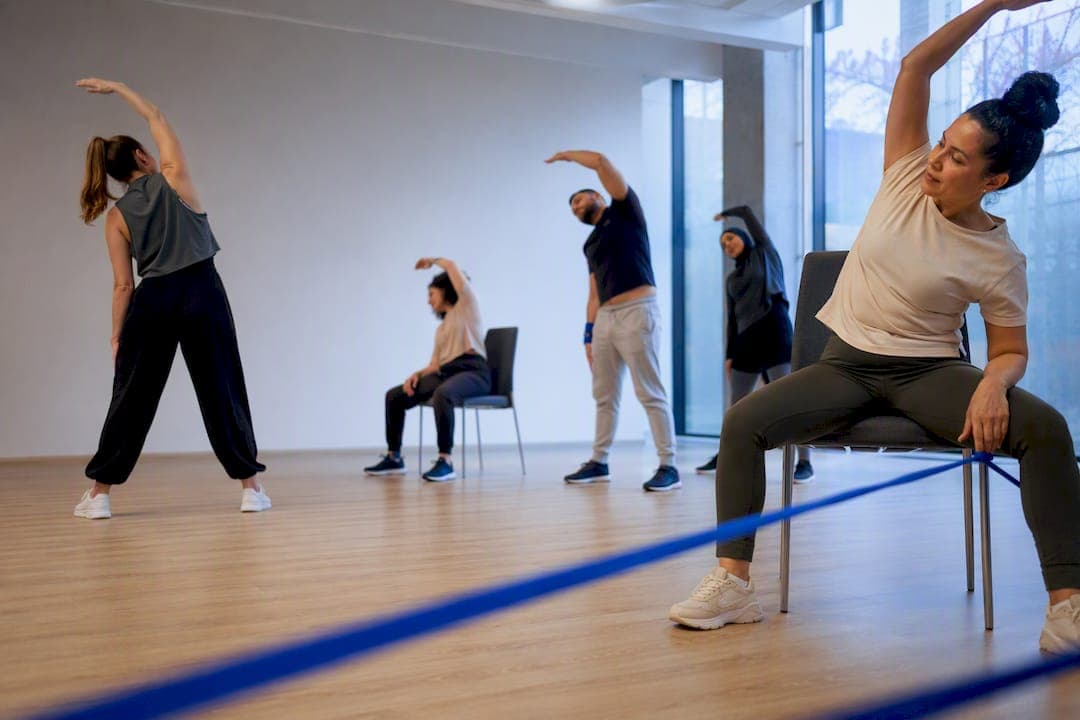
An inclusive wellness program gives every employee a realistic path to participate, regardless of physical ability, income, culture, schedule, or health status, and it builds equity checkpoints directly into the design instead of bolting them on later. Employers who get this right see broader engagement across demographic groups and more even health outcomes, not just higher headline participation. The rest of this guide covers how to build one, what to measure, and where a program tends to go wrong.
TL;DR:
- Offering multiple delivery formats and non-fitness activities ensures programs are accessible to employees with diverse needs and schedules.
- Materials must be accessible, including captions, translations, and accommodations, to include employees with disabilities or language barriers.
- Incentives should reward participation rather than outcomes, and program governance must include employees from underrepresented groups to prevent unintentionally excluding anyone.
- Conduct an inclusion audit, set measurable goals, and pilot with diverse groups before expanding, ensuring the program remains equitable and effective.
- Measure engagement, equity gaps, and self-reported health outcomes quarterly to track progress and identify disparities needing targeted attention.
Table of Contents
- What Is an Inclusive Wellness Program, and Why Does It Matter?
- What Wellness Activities Actually Reach Everyone?
- How Do You Design and Launch an Inclusive Wellness Program?
- What Should You Measure to Prove the Program Works?
- How Does Hadaco Support Evidence-Based Inclusive Outcomes?
- A Short Checklist Before You Launch Anything
- Where Hadaco Fits Into Your Inclusion Strategy
- Sources
- FAQ
What Is an Inclusive Wellness Program, and Why Does It Matter?
An inclusive wellness program is one built so a night-shift warehouse worker, a remote software engineer managing a chronic illness, and a new hire who doesn't speak English as a first language can all realistically take part. That's a much higher bar than offering a gym subsidy and calling it done.
The business case holds up under scrutiny. Designing inclusive wellness programs for diverse populations requires evidence-based interventions paired with flexible, multi-modal access, precisely because shift workers and remote staff get left out of traditional 9-to-5, on-site models. Program design also can't ignore social determinants of health, since income, transportation, and neighborhood access already shape who can show up to a Tuesday lunch-and-learn.
One-size-fits-all wellness carries real downside:
- Low participation among employees who don't see themselves reflected in the program
- Stigma for people managing invisible conditions who feel pressured to disclose them
- Compliance exposure under the ADA and EEOC wellness rules when incentives function more like requirements
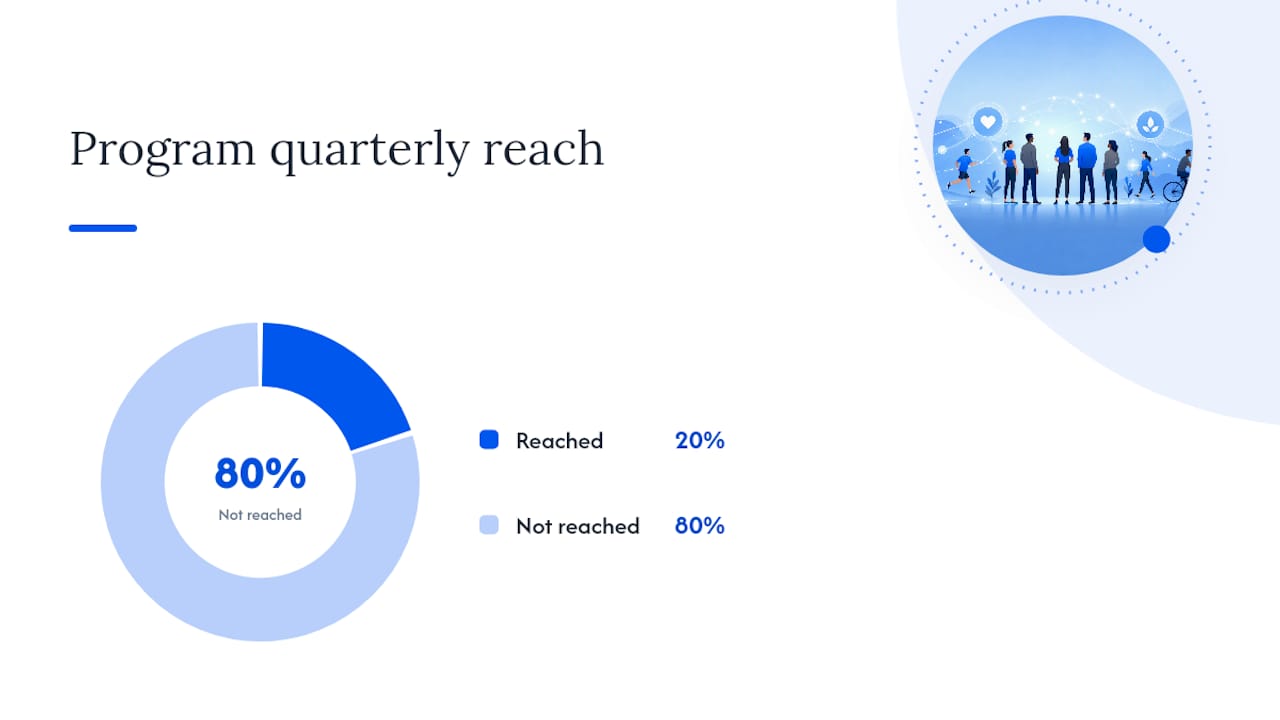
- Wasted budget on activities that reach the same 20% of employees every quarter
None of this requires a legal opinion to fix. It requires better design.
What Wellness Activities Actually Reach Everyone?
Breadth beats novelty here. A program that offers five ways to engage will outperform one clever flagship challenge almost every time, because the flagship challenge only works for people who fit its mold.
- Multiple delivery formats. Run live in-person sessions, live virtual sessions, and recorded content employees can use on their own schedule. A hybrid delivery model lets a night-shift nurse and a headquarters employee both get value from the same content library.
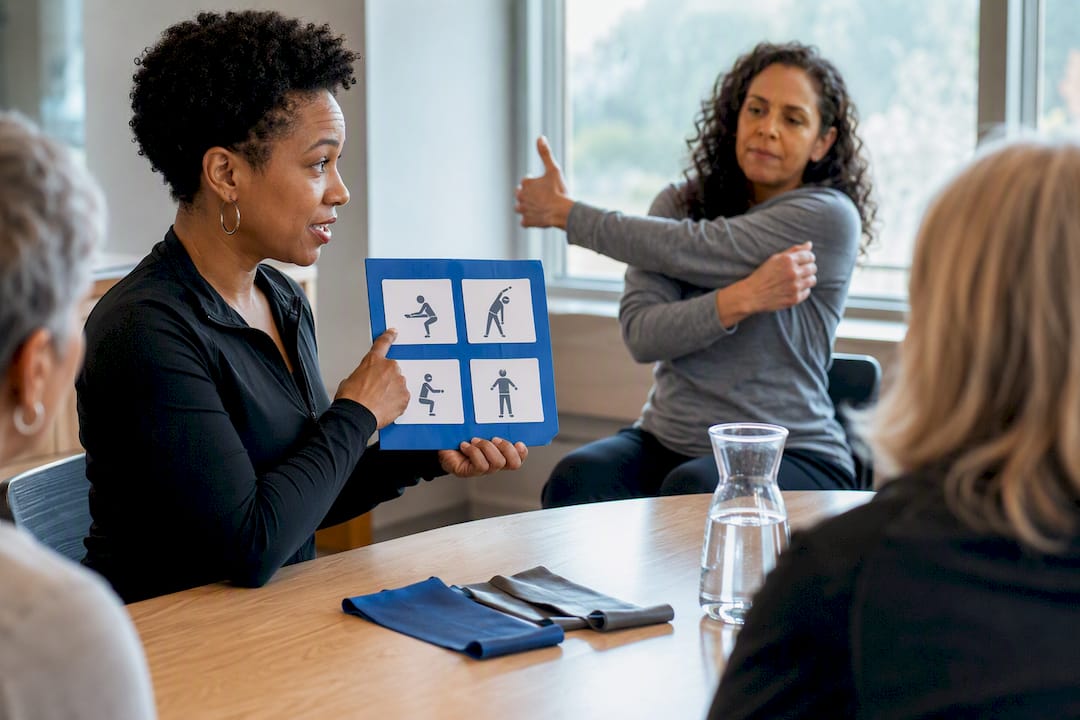
- Nonfitness tracks. Financial education, caregiving support groups, creative or social activities, and trauma-informed mental health resources matter as much as step challenges, sometimes more. Programs that lean too hard on physical activity metrics quietly exclude people managing disabilities or chronic conditions.
- Accessible materials by default. Captioned video, plain-language handouts, translated materials for major language groups on staff, and venues that accommodate mobility devices. The Inclusive Worksite Wellness Guide treats accessible environments and communications as core program infrastructure, not an add-on for a handful of employees.
- Voluntary opt-in with fair incentives. Reward participation, not outcomes tied to a body weight, step count, or blood pressure reading. Single-metric incentives quietly punish employees who can't hit that number for reasons outside their control.
- A representative wellness committee. Include employees with disabilities and from historically underrepresented groups in program governance, not just as survey respondents. This is a structural fix, not a feel-good gesture.
Pro Tip: Ask your wellness committee to review every new program idea for one question: "Who gets left out of this by design?" If the honest answer is a specific group of employees, redesign before launch, not after low turnout tells you.
Facilitator training deserves its own line item. Coaches and instructors need cultural competency training so they build trust across different backgrounds and health literacy levels, not just deliver content well to the people most like them.
How Do You Design and Launch an Inclusive Wellness Program?
Treat this as a five-stage rollout, not a single announcement email.
- Run an inclusion audit. Combine a short demographic and needs survey, a handful of focus groups, and an accessibility walkthrough of your physical and digital spaces. This tells you where the current program fails before you spend more money extending it.
- Set measurable goals up front. Decide what "working" looks like: participation rates by department and demographic, at least one equity indicator, and a couple of self-reported health signals. Put a reporting cadence on the calendar before launch, not after.
- Vet partners and facilitators. Ask directly about inclusion training and how they accommodate invisible disabilities, chronic illness, and neurodivergent employees. Evidence-based program design should be a vendor requirement, not a nice-to-have.
- Pilot with a genuinely diverse cohort. Small pilot groups, real feedback, real edits. A pilot that only includes enthusiastic early adopters tells you nothing about the employees who need the program most.
- Roll out through multiple channels. Email, break room signage, shift-supervisor announcements, and an on-demand hub for people who miss the live rollout.
A few things to check before you scale beyond the pilot:
- Are non-English speakers getting materials in a language they're comfortable with?
- Can someone with a hearing impairment access every session, not just the ones you remembered to caption?
- Does the incentive structure reward participation for employees who can't complete a fitness-based challenge?
- Is there a private way to request accommodations without disclosing a diagnosis?
What Should You Measure to Prove the Program Works?
Three metric groups cover most of what leadership actually wants to know: engagement, equity, and outcomes.
- Engagement: participation rates broken out by department, shift, and demographic group, not just a single company-wide number.
- Equity: gaps in access and uptake between groups. If your headquarters staff participates at 60% and your remote warehouse team sits at 12%, that gap is the story, not the topline average.
- Outcomes: self-reported health changes, plus any opt-in clinical indicators employees choose to share. Outcome-linked models like the ACCESS chronic care framework show how tying measurement to real outcomes, rather than activity counts, produces more useful reporting.
Keep collection light: short pulse surveys, opt-in biometric or health screenings, and simple participation logs beat long annual assessments that people abandon halfway through. Report quarterly and connect the numbers to business metrics your CFO already tracks, including absenteeism, turnover, and healthcare spend. When a disparity shows up in the equity numbers, treat it as the priority fix for next quarter, not a footnote in the annual report.
How Does Hadaco Support Evidence-Based Inclusive Outcomes?
Hadaco's model gives HR teams a working example of what "evidence-based and measurable" looks like in practice, rather than in a slide deck. The programs target chronic disease management, preventive care, and engagement, and they integrate with a company's existing benefit plans instead of replacing them, which matters for any employer worried about disrupting coverage employees already rely on.
When you're evaluating any vendor, inclusive or otherwise, ask for the same things:
- Quarterly reporting with clear, agreed-upon metrics, not a year-end summary with no benchmarks
- A transparent way to estimate savings and outcomes before you sign anything
- Documented facilitator training on inclusion and cultural competency
- A clear accommodations process for employees with disabilities or chronic conditions
A performance-based partner structure, where fees track demonstrated savings and engagement rather than a flat upfront cost, gives HR teams a built-in incentive to keep the reporting honest.
A Short Checklist Before You Launch Anything
Three priorities matter more than the rest: representative governance, a voluntary participation model, and a measurement plan with a real reporting date. Three red flags should stop you cold: mandatory "wellness," incentives tied to a single health metric, and any vendor that can't describe its inclusion training. Start small, ask employees what's actually working, and adjust before you scale.
— Gene
Where Hadaco Fits Into Your Inclusion Strategy
Hadaco offers programs that complement existing benefit plans, using evidence-based interventions for chronic disease, preventive care, and engagement, with no upfront fees to get started. Employers typically see measurable results, including improved engagement and retention.
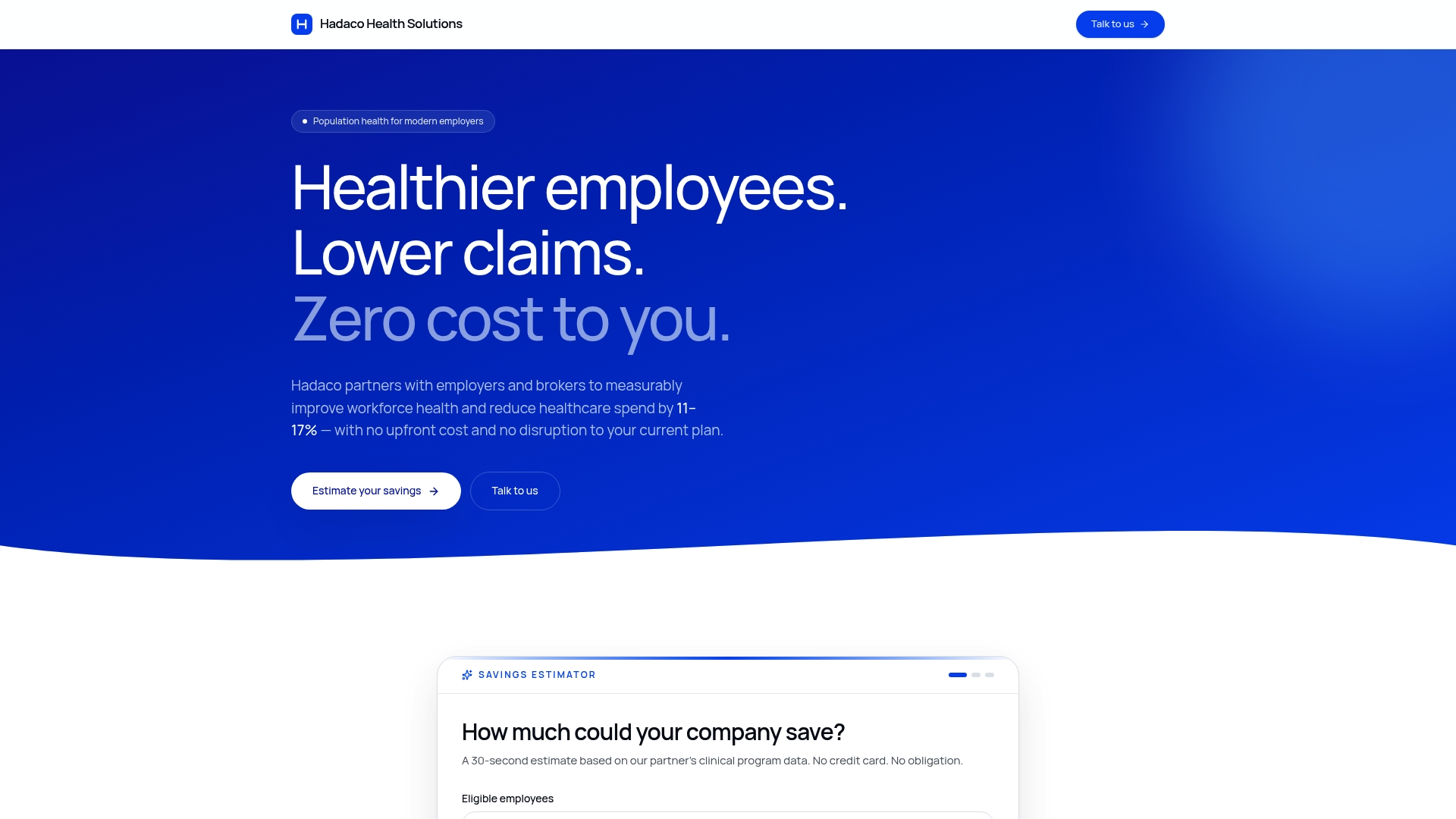
What that looks like in practice: a savings estimator that shows projected impact before you commit to anything, and quarterly reporting so your leadership team sees real numbers instead of a vague year-end summary. If you're evaluating vendors against the inclusion checklist above, ask Hadaco directly how it handles facilitator training and accommodations. If your organization is ready to pilot a program built on measurable outcomes, visit Hadaco's website to talk through what a pilot could look like for your workforce.
Sources
- Designing inclusive wellness programs for diverse populations
- Inclusive Worksite Wellness Guide (NCHPAD)
- 6 steps to make wellness programs more inclusive (SHRM)
FAQ
What Are Examples of Inclusive Wellness Programs?
Strong examples combine multi-modal delivery (in-person, virtual, and recorded), nonfitness tracks like financial education and caregiving support, and accessible formats such as captioned content and translated materials, all governed by a representative employee committee.
What Is the 5-3-1 Rule for Wellness?
The 5-3-1 rule is a general activity guideline suggesting five servings of fruits and vegetables, three sessions of exercise, and one hour of screen-free time daily. It's a personal health heuristic, not a workplace program design standard, so treat it as background context rather than a framework to build a corporate wellness program around.
How Much Does a Wellness Program Cost per Month?
Costs vary widely by program scope and delivery model, so there's no single reliable monthly figure to quote. Performance-based models like Hadaco's avoid upfront fees entirely and instead tie costs to demonstrated savings and engagement.
What Are the 7 Pillars of Wellness?
Common frameworks list physical, mental, emotional, social, financial, occupational, and environmental wellness as the seven pillars, though the exact list varies by source. Inclusive programs try to touch several pillars at once instead of concentrating entirely on physical fitness, which is where many traditional programs fall short.
How Do You Make Wellness Participation Voluntary Without Losing Engagement?
Offer incentives for participation itself rather than for hitting a specific health outcome, and give employees several ways to earn the same reward. The SHRM inclusive wellness framework treats voluntary design as a foundation, not an optional feature.