A good employer migraine program combines three things: education, access to clinically sound care, and practical workplace support. It is voluntary, private, and measured against claims and productivity data from the start. Published workplace studies report meaningful gains in workdays and productivity, and a well-designed program can sit on top of the health plan you already have. This guide covers what to include, what the evidence shows, the accommodation rules U.S. employers should know, and how to prove the program pays for itself.
TL;DR
- Migraine is a workforce issue: one study found an average of 10.7 lost workdays per year per worker with migraine in the past 12 months.
- The strongest programs are multidisciplinary: education, clinical triage, coaching and workplace adjustments, not a single webinar.
- A corporate program studied in Headache reported 490% ROI and 10.8 workdays regained per participant per year.
- Most common accommodations are inexpensive, and the ADA may require them. Keep participation voluntary and confidential.
- Decide your measures (claims, participation, self-reported function) before launch, and review them quarterly.
Table of Contents
- Why migraine belongs on the benefits agenda
- What an employer migraine program can include
- What the evidence shows
- Accommodations and ADA basics for U.S. employers
- Launching alongside your existing benefits
- How to measure participation, outcomes and ROI
- Perspective
- Bring migraine support into a population health program
- FAQ
- Sources
Why migraine belongs on the benefits agenda
Migraine is not an occasional bad headache. It is a neurological condition, and it tends to strike during working years. According to the Migraine at Work employer guide, more than 90% of people with migraine cannot work or function normally during an attack. The same guide cites a national survey finding that workers with migraine in the past year lost an average of 10.7 workdays annually.
For a finance leader, the part that stays hidden is the indirect cost. Direct costs show up in your claims: office visits, emergency care, imaging, prescriptions. Indirect costs show up as absences, presenteeism (people at their desks but working at a fraction of capacity), errors and turnover. They rarely appear on any report your carrier sends you.
If you want a first estimate for your own workforce, the Migraine Impact Model described in a 2020 study of U.S. employers lets an employer enter industry, location, workforce size, gender, age and compensation to estimate prevalence and annual direct and indirect costs. Treat the output as a planning figure, then replace it with your own claims data once a program is running.
What an employer migraine program can include
The best programs do not rely on one lever. Researchers writing in a 2022 review of migraine in the workplace note, citing the Midwest Business Group on Health, that because migraine has many contributing factors, the most effective interventions combine medical treatment optimization with lifestyle and environmental support.
In practice, a program has four layers.
1. Education and awareness
Employer case studies compiled by the Midwest Business Group on Health describe education delivered by webinars, an intranet site and emails. Good content covers what migraine is, how it differs from tension headache, when to seek care, and how to talk to a manager. Manager training matters as much as employee content, because a supervisor who understands the condition is far less likely to treat an absence as a performance problem.
2. Clinical access and treatment optimization
Many people with migraine have never had a firm diagnosis or have not tried the treatments that are available today. The program studied at Novartis used a medical doctor, neurologist referral when appropriate, and nurse coaching with lifestyle action plans. That mix is a useful template: triage first, specialist care for those who need it, coaching to sustain changes.
Some employees also look for non-drug options, and a program that points people to qualified clinicians gives them a safe way to explore them. For example, some people ask about upper cervical chiropractic care as part of their care plan, and your navigation resources should help them find licensed providers and discuss options with their physician.

3. Lifestyle and behavioral support
Sleep, stress, hydration, meal timing and screen habits are common triggers or amplifiers. Coaching that builds individual action plans fits here. Sleep is a frequent overlap, and our guide to a workplace sleep program that cuts costs shows how to build that support. Stress and mental health also interact with migraine, which is why many employers connect migraine support to mental health benefits they already offer. The case studies mention one biotech employer that increased Employee Assistance Program visits for stress relief.
4. Workplace support
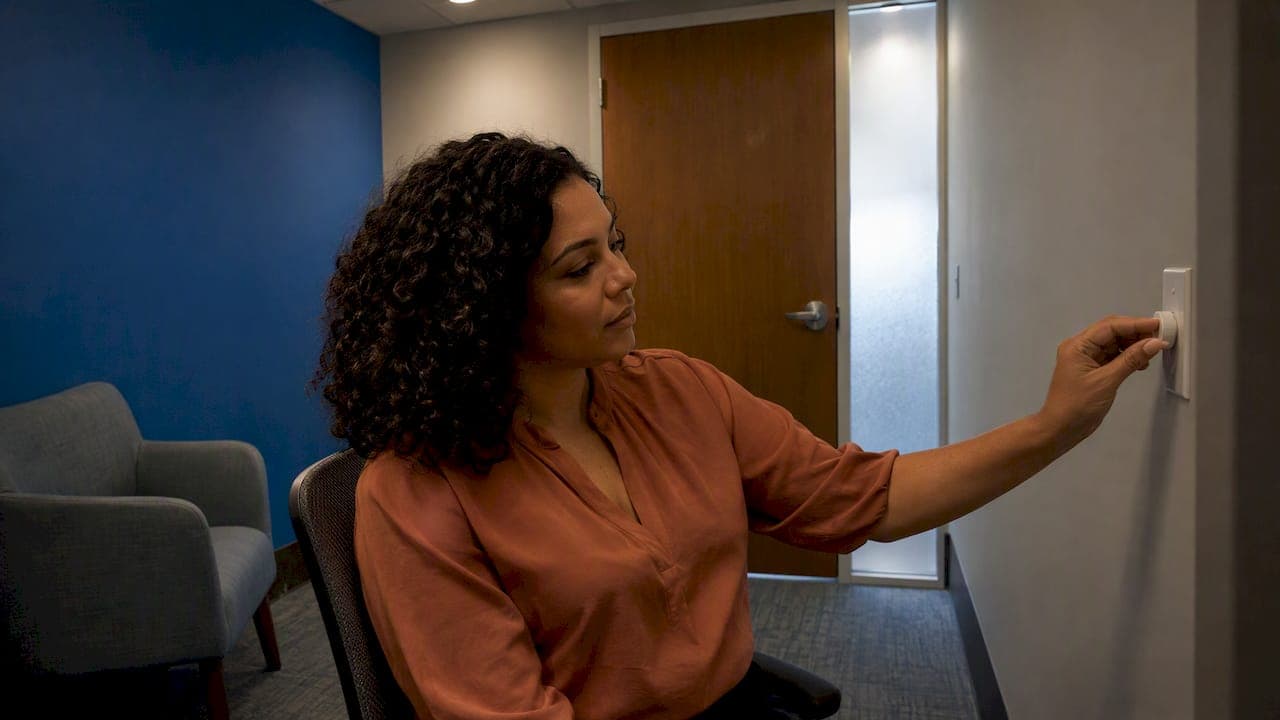
The Migraine at Work guide lists flexible schedules, dark quiet spaces and adjustable lighting as workplace measures. Case studies also describe designated dark rooms. These steps cost little and signal that the program is real.
What the evidence shows
The research is encouraging, with an honest caveat: the strongest numbers come from individual company programs, so your results will depend on design and participation.
| Program | What was measured | Reported result |
|---|---|---|
| Novartis corporate migraine program | Migraine disability (MIDAS), patient activation, workdays, ROI | MIDAS scores improved 54% at month 6 and 64% at month 9; patient activation scores improved 8% and 11%; 10.8 workdays gained per year; 490% ROI |
| Fujitsu workplace headache program | Productivity per employee with headache | Estimated annual productivity saving of US$4,531 per employee with headache, or 14.7 days of full productivity |
Two lessons stand out. First, the gains came from programs that identified people who needed help and connected them to care, not just from posting information. Second, both studies measured function, not only attendance. Presenteeism is where most of the value sits, and you will only see it if you ask.
Accommodations and ADA basics for U.S. employers
A wellness program does not replace your legal obligations. Under the Americans with Disabilities Act, employers may need to provide reasonable accommodations unless doing so creates undue hardship or a direct threat, as summarized in the Aimed Alliance 2021 report on migraine in the workplace. Whether migraine qualifies for a specific employee is a case-by-case question, so involve HR and employment counsel in individual decisions.
The same report lists common adjustments: flexible schedules, telecommuting, alternative lighting, anti-glare filters, quiet rooms and anti-fragrance policies. It states that most cost less than $500 to implement.
The risk of getting this wrong is real. The EEOC sued American Woodmark, alleging the company denied a reasonable accommodation to an employee with epilepsy, migraines and a heart condition, and fired her after she requested leave. The case is a reminder to train managers to route accommodation requests to HR quickly, and never to handle them informally.
If you are designing incentives or participation rules, review them against disability rules first. Our overview of ADA-compliant wellness programs covers the design points.

Launching alongside your existing benefits
You do not need to replace your medical plan, your pharmacy benefit or your EAP. The aim is to fill the gaps between them.
- Start with your data. Pull 12 to 24 months of medical and pharmacy claims for migraine-related diagnoses, emergency visits, imaging and specialty drugs. Add a short, anonymous survey on headache burden.
- Choose a clear scope. Decide whether the program covers education only, or education plus clinical navigation and coaching. Evidence favors the second.
- Make participation voluntary and private. At Novartis, employees could register voluntarily and anonymously, after which an independent telemedicine provider contacted them. That design keeps health information away from managers and encourages people who would never raise their hand otherwise.
- Integrate with what exists. Position migraine support inside your well-being program, and make sure your EAP, carrier navigation and nurse line all point to the same front door.
- Train managers. Cover recognition, how to respond to an attack, and how to route accommodation requests.
- Set the reporting rhythm before launch. Agree on what you will review and when.
Migraine often sits alongside other chronic conditions, so it helps to fold it into a broader approach. Our evidence-based plan for workplace chronic disease shows how to prioritize across conditions.
How to measure participation, outcomes and ROI
The MBGH case studies show a practical measurement mix: a biotech employer used medical and pharmacy claims data together with self-reported app and survey data. Claims tell you about cost. Self-report tells you about function. You need both.
A workable scorecard looks like this:
- Reach: percent of eligible employees who enroll, and how many of those have a migraine diagnosis or screen positive.
- Engagement: active participation after 90 days, coaching sessions completed, specialist referrals made.
- Clinical and functional outcomes: change in a validated disability score such as MIDAS, and self-reported lost and impaired workdays.
- Claims: emergency visits and imaging for headache, and pharmacy spend, compared with a baseline or matched group.
- Financial: program cost against claims savings, with productivity gains reported separately so finance can see which is which.
Keep productivity value and hard claims savings in separate columns. CFOs trust a program more when the conservative number stands on its own and the productivity gain is shown as upside. For a fuller framework, read our guide to corporate wellness ROI for HR leaders.
Perspective
Most employers we speak with are surprised by how little they know about migraine in their own population. The cost is spread across emergency visits, specialty drugs, missed days and quiet underperformance, so it never shows up as one line item.
Our view is that migraine is best handled the way any chronic condition should be: find the people who need help, connect them to evidence-based care, support the habits that keep them well, and report results to the people who pay for it. We design population health programs around that logic. They are meant to complement your current plans, not disrupt them, and they come with no upfront fees.
We also believe in accountability. That is why we offer a savings estimator and quarterly reporting, so HR and finance can see what is working. In their first year, companies often see average savings of $451 per employee across our programs, along with better engagement and retention. Your own results will depend on your population and participation, which is exactly why we measure them with you.
Gene
Bring migraine support into a population health program
If you would rather not assemble education, navigation, coaching and reporting from separate vendors, a population health program can cover them together. Hadaco's population health programs deliver evidence-based interventions for chronic disease, preventive care, mental health and employee engagement. They integrate with your current benefit plans, include a savings estimator and quarterly outcome reporting, and carry no upfront fees. Our fees depend on demonstrated savings and engagement outcomes.
Brokers and benefit advisors can use the same approach with clients. To see how it would apply to your workforce, book a consultation through our site and start with the savings estimator.
FAQ
How common is migraine among employees?
It is common enough that a mid-sized employer almost certainly has many affected employees, though they may not disclose it. The Migraine Impact Model lets you enter your industry, location, workforce size and demographics to estimate prevalence and cost for your own company. Your claims data will refine that estimate.
What accommodations help employees with migraine?
Common options include flexible schedules, remote work, anti-glare filters, adjustable lighting, quiet rooms and fragrance-free policies. The Aimed Alliance report says most cost less than $500. Handle each request through HR, because the ADA may apply.
How do we protect employee privacy in a migraine program?
Make enrollment voluntary and keep health information away from managers. The Novartis program let employees register anonymously before an independent provider reached out. Report only aggregated results to the employer.
Does a migraine program require changing our health plan?
No. A well-designed program works alongside your medical plan, pharmacy benefit and EAP, filling gaps in education, navigation and coaching. Our population health programs are built to complement existing plans rather than replace them.
What results should we expect?
Published programs report gains, such as 10.8 regained workdays and 490% ROI at Novartis, but results vary by company. Set baselines first, then track claims, participation and self-reported function every quarter.
Sources
- Migraine at Work Employer Guide
- Estimating the Economic Burden of Migraine on US Employers
- Midwest Business Group on Health: Employer Case Studies
- Migraine in the workplace (2022 review)
- Employee and Employer Benefits From a Migraine Management Program
- Fujitsu workplace headache program study
- Aimed Alliance: Migraine Disease in the Workplace 2021
- EEOC: American Woodmark sued for disability discrimination