
The most reliable way to reduce mental health stigma combines three things: contact-based storytelling from people with lived experience, everyday language change, and sustained supports like workplace programs and responsible media engagement. Each tactic raises the odds that someone struggling will seek help instead of hiding. This guide breaks down the evidence and gives you scripts, event steps, and workplace actions you can start using today. If you or someone near you is in crisis, call or text 988 now.
TL;DR:
- Peer panels outperform lectures; keep events under 60 minutes, prepare stable speakers with consent and boundaries, assign a trained facilitator, and debrief afterward.
- A review of 144 studies covering more than 90,000 participants ranked stigma as the fourth highest barrier to help seeking, with disclosure concerns most common.
- Myth correction campaigns can reinforce stereotypes when they repeat myths prominently; pair each correction with a recovery story or lived experience voice.
- Workplaces should replace annual workshops with manager support and quarterly tracking of benefit use, anonymous comfort surveys, training, and mental health related absence.
- When someone resists care, ask open ended questions, reflect what they say, avoid ultimatums or shame, and call or text 988 if crisis signs appear.
Table of Contents
- Practical, Evidence-Based Actions to Reduce Stigma
- Evidence: Contact-Based Interventions vs. Education-Only Approaches
- Language and Storytelling: Phrasing, Safe Disclosure, and Media Engagement
- Workplace Strategies That Reduce Stigma and Support Help-Seeking
- How to Approach Someone Who Refuses Help: Scripts, Safety, and Crisis Resources
- Public Campaigns and Media Strategies to Shift Narratives at Scale
- Employer Programs and Measurable Outcomes
- What Stigma Actually Looks Like: Public, Self, Structural, and By Association
- Cultural and Demographic Factors Shape How Stigma Shows Up
- Measuring and Tracking Stigma Reduction in Your Organization
- Why Leadership Behavior Sets the Ceiling for Culture Change
- Folding Stigma Reduction into Wellness and Diversity Initiatives
- Why Empathy-First, Sustained Approaches Win
- A Discreet Option for Employers: An Evidence-Focused Workplace Program
- FAQ
- Sources
Practical, Evidence-Based Actions to Reduce Stigma
Stigma reduction works best as a layered effort, not a single campaign. The strongest results come from combining direct contact with people who have lived experience, consistent language habits, and education that avoids common pitfalls.
Contact-based events remain the single most effective lever available to advocates. A peer panel, where two or three people share recovery stories and then take audience questions, does more to shift attitudes than a lecture on symptoms and statistics. If you are organizing one:
- Recruit speakers who are stable in their recovery and have had time to process their story before telling it publicly.
- Set clear guidelines in advance: time limits, topics that are off-limits, and a signal for a speaker to pause if needed.
- Assign a trained facilitator who can redirect inappropriate questions and manage audience reactions.
- Debrief with speakers afterward to check how the experience felt and whether follow-up support is needed.
Language shapes perception more than most people realize. Small, consistent swaps make a real difference:
- Say "a person with schizophrenia," never "a schizophrenic."
- Say "died by suicide," never "committed suicide."
- Say "living with depression," never "suffers from depression."
- Avoid using diagnoses as casual adjectives ("that's so OCD," "he's being bipolar").
Education campaigns help, but only when designed carefully. Myth-versus-fact flyers can backfire if they repeat the myth prominently, since repetition can reinforce the very stereotype you're trying to dismantle, according to a review of anti-stigma campaign design. Pair any factual correction with a recovery narrative or a real voice, rather than presenting facts in isolation.
A few quick scripts help in everyday moments:
- Opening a conversation: "I've noticed you seem off lately. I'm here if you want to talk, no pressure."
- Responding to a stigmatizing comment: "I don't think that's fair. A lot of people manage mental health conditions and still live full lives."
- A social media post: "1 in 5 of us will experience a mental health condition this year. Let's talk about it like we would any other health issue."
- A small-group icebreaker: Ask participants to name one thing they wish people understood about mental health, no diagnosis required.
Pro Tip: Keep any public-facing stigma event under 60 minutes. Attention and emotional bandwidth both drop sharply after that, and shorter sessions get better follow-up engagement.
For readers who want a clinical perspective on these conversations, practitioner-facing resources on stigma reduction strategies offer additional grounding in how therapists approach these same moments.
Evidence: Contact-Based Interventions vs. Education-Only Approaches
Stigma is not just an attitude problem. It is a measurable barrier to care. A systematic review of 144 studies covering more than 90,000 participants found that stigma ranks as the fourth highest deterrent to help-seeking, with disclosure concerns cited most often as the specific worry holding people back, according to research published via PubMed.
A median effect size of d = -0.27 links stigma to reduced help-seeking, a small-to-moderate but consistent negative association across the reviewed studies. That number matters because it shows stigma's effect is not trivial or anecdotal: it shows up reliably across different populations and study designs.
Contact-based programs, where people interact directly with someone who has lived experience, tend to outperform information-only sessions for adult audiences. Social psychology and neuroscience research on stigma mechanisms offers insight into why: direct contact challenges stereotypes at a more personal level than facts alone, and it activates empathy in ways a lecture cannot, according to a review of stigma intervention design.
Fidelity matters as much as format. A few guardrails improve outcomes:
- Train presenters on boundaries, so they share enough to connect without re-traumatizing themselves.
- Build in consent checks before every public appearance, since comfort levels can shift over time.
- Track outcomes with simple pre- and post-event surveys rather than assuming impact.
Language and Storytelling: Phrasing, Safe Disclosure, and Media Engagement
Words carry more weight than intent. Replacing "the mentally ill" with "people with mental illness" shifts focus from a label to a person, and that shift is the foundation of person-first language. Avoid phrases that use a diagnosis as a personality trait, like calling someone "crazy" or "psycho" in casual conversation.
If you're helping someone prepare to share a recovery story publicly, a few safeguards protect them:
- Confirm they have full control over what gets shared and what stays private.
- Focus the narrative on recovery and coping, not just crisis details.
- Set a boundary for follow-up questions, including the option to decline.
- Check in after the event, since public disclosure can bring up delayed emotional reactions.
Pro Tip: Ask every speaker what they want the audience to remember, one sentence, before they go on. It keeps the story focused and gives them a sense of control over the narrative.
Media coverage still shapes public perception in powerful ways. Portrayals that link mental illness with violence reinforce both public and self-stigma, according to guidance for media professionals. Advocates can push back by offering journalists balanced sources and recovery-focused framing instead of only crisis narratives.
Direct outreach to media professionals can work, though results are modest. One anti-stigma outreach campaign aimed at journalists reported a response rate of about one third and some corrective actions among those who responded, showing that targeted outreach produces real but partial change, according to a campaign evaluation. A short rapid-response template helps: identify the specific stigmatizing phrase or framing, offer a corrected version, and include a credible expert or source willing to comment.
Workplace Strategies That Reduce Stigma and Support Help-Seeking
Workplaces shape whether people feel safe asking for help, and managers set the tone more than any poster or policy. A manager who says, "I've used our counseling benefit before, and it helped," normalizes seeking support far more than a generic wellness email.
A few practical steps translate stigma reduction into daily management practice:
- Train managers on simple scripts: "I've noticed you seem stretched thin. Counseling benefits are available, and I'd encourage you to use them."
- Combine education, contact, and ongoing support rather than relying on a single annual workshop, since one-off training tends to shift attitudes only temporarily.
- Track participation and referral rates in existing employee assistance programs to see if awareness efforts are translating into actual use.
- Run short, anonymous pulse surveys asking employees whether they feel comfortable discussing mental health with their manager.
- Review the data quarterly and adjust messaging or training based on what's actually moving.
A practical roadmap for integrating mental health supports into existing benefit plans can help HR teams sequence these steps without overhauling what's already in place.
When internal capacity is limited, some employers choose to scale this work through a partnered program that layers structured measurement on top of existing benefits, rather than building a stigma-reduction initiative from scratch. That decision tends to make sense once an organization has outgrown ad hoc workshops and wants outcomes it can actually report to leadership. A guide to designing employer mental health programs walks through what that structure can look like.
How to Approach Someone Who Refuses Help: Scripts, Safety, and Crisis Resources
You cannot force someone into care, but you can shape the conversation in ways that keep the door open. SAMHSA's guidance recommends listening without judgment, asking open-ended questions like "What's been going on for you lately?" instead of yes-or-no questions, and using "I" statements such as "I've noticed you haven't seemed like yourself" rather than accusatory language. Repeating back what you hear ("It sounds like work has felt unbearable") shows you're actually listening, not just waiting to respond.
Avoid these common missteps:
- Don't force the conversation or issue ultimatums.
- Don't use shame or guilt as motivation ("Think about what this is doing to the family").
- Don't minimize what they're feeling ("It's not that bad, just push through it").
SAMHSA's conversation guide also recommends picking the right time and place, expressing concern directly, and being patient since change rarely happens in one conversation.
If someone shows signs of crisis, including talk of self-harm, hopelessness, or giving away belongings, treat it as urgent. Call or text 988 or use the online chat at 988lifeline.org to reach a trained crisis counselor, available 24 hours a day, according to SAMHSA. Follow up afterward, even with a short text, since consistent check-ins matter more than a single grand gesture.
Public Campaigns and Media Strategies to Shift Narratives at Scale
Large-scale campaigns move the needle when they avoid sensationalism and instead center recovery and lived experience. Campaigns focused on crisis imagery often reinforce fear, whereas those highlighting individuals managing their condition and living full lives tend to build familiarity and reduce the sense of 'otherness.'
A few design principles separate effective campaigns from forgettable ones:
- Train spokespeople and journalists on person-first language before any media appearance.
- Partner with influencers who have genuine, disclosed experience rather than paid messaging with no personal connection.
- Measure attitude change with before-and-after surveys, not just reach or impressions.
- Track help-seeking indicators, like helpline call volume, as a proxy for real-world impact.
Celebrity disclosures can shift public conversation quickly, but they work best paired with accessible resources, since a single viral moment fades without a follow-up pathway to care. Partnering with media outlets directly, as seen in targeted journalist outreach efforts, produces smaller but more durable corrections to how stories get framed going forward.
Employer Programs and Measurable Outcomes
Workplace programs shift norms when they give employees confidential, low-friction access to care alongside visible leadership support. A program that sits quietly inside existing benefits, rather than announcing itself as a stigma intervention, often reaches people who would never attend a stand-alone workshop.
We built our approach around that principle: programs that integrate with current benefit plans instead of replacing them, a savings estimator so HR teams can see projected impact before committing, and quarterly reporting that tracks outcomes rather than just participation counts. That structure gives benefits leads something concrete to bring to leadership: measurable change, not just a program that ran once and faded.
For HR teams exploring this path, the practical sequence is straightforward: pilot a program with a clear baseline, measure engagement and claims impact over a full quarter, and iterate based on what the data shows. A practical guide to evidence-based wellness program design covers how to structure that measurement from the start.
What Stigma Actually Looks Like: Public, Self, Structural, and By Association
Stigma isn't one thing. Public stigma is the negative attitude society holds toward people with mental illness, like assuming someone with depression is simply lazy. Self-stigma happens when a person internalizes those public attitudes and starts believing them about themselves, which can erode confidence and delay help-seeking on its own.
Structural stigma is different again: it lives in policies, institutions, and systems, such as insurance plans that cover mental health care less generously than physical health care, or workplace policies that make taking mental health leave harder than taking a sick day for the flu. This form of stigma is often invisible to the people it does not directly affect, which makes it harder to challenge.
Stigma by association, sometimes called courtesy stigma, affects family members, friends, or caregivers of someone with a mental health condition, even though they don't have the condition themselves. A parent of a child with bipolar disorder might face judgment or social withdrawal from others, simply through that connection.
Understanding which type of stigma you're addressing changes the approach. A public awareness campaign does little against structural stigma embedded in insurance policy, and a policy change does nothing to address the self-stigma someone carries after years of internalized shame. Effective strategies usually need to target more than one layer at once.

Cultural and Demographic Factors Shape How Stigma Shows Up
Stigma doesn't look the same everywhere, and tailoring your approach to the audience matters as much as the message itself. In some cultural contexts, mental health struggles are framed primarily as a family matter rather than an individual one, which changes who needs to be part of the conversation: outreach aimed only at the individual may miss the people whose support actually determines whether someone seeks care.
Age and generational factors also shift what resonates. Younger audiences often respond well to social media storytelling and peer-led content, while older audiences may trust a conversation with a primary care provider or a community or religious leader more than an online campaign.
Workplace demographics matter too. A multigenerational, multicultural workforce needs more than a single training module translated into different languages. Effective employer programs adapt language, delivery format, and even the choice of who delivers the message, since a peer from a similar background or role often lands better than a generic corporate presenter. Anti-stigma interventions that combine curriculum and contact components have shown they can narrow stigma disparities across different demographic groups when sustained over time, which supports the case for tailored, ongoing programs over one-size-fits-all training.
Measuring and Tracking Stigma Reduction in Your Organization
You cannot manage what you don't measure, and stigma reduction is no exception. A few practical metrics give HR and advocacy teams something concrete to track over time:
- Employee assistance program utilization rates, tracked quarterly, show whether awareness is translating into actual use.
- Anonymous survey questions asking employees whether they'd feel comfortable disclosing a mental health concern to their manager.
- Manager training completion rates alongside follow-up surveys on confidence having these conversations.
- Absenteeism and short-term disability trends related to mental health, which can indicate whether people are accessing care earlier.
The key is consistency: a single survey after a single training tells you almost nothing. Quarterly or biannual tracking, compared against a clear baseline, shows whether culture is actually shifting or whether initial enthusiasm faded after the first event. Programs that report outcomes on a regular cadence give leadership something more persuasive than anecdote when asking for continued investment.
Why Leadership Behavior Sets the Ceiling for Culture Change
No training module outperforms a leader who models the behavior themselves. When a senior executive openly mentions using therapy or taking a mental health day without minimizing it, that single action often does more to normalize help-seeking than months of poster campaigns.
Leadership modeling works through a simple mechanism: employees watch what leaders do, not just what policies say. A manager who approves a mental health day without hesitation, or who checks in genuinely rather than performatively, signals that the stated policy is real. The inverse is also true: a workplace with a generous mental health benefit, undermined by a culture of presenteeism or a leader who jokes about "just pushing through," sends a louder message than the benefit itself.
Practical leadership actions include:
- Speaking openly, even briefly, about the value of mental health support.
- Avoiding language that frames taking leave or using benefits as a weakness.
- Holding managers accountable for supportive behavior, not just technical performance.
This is not about leaders oversharing personal details. It's about consistent, visible permission that makes the stated culture match the lived one.
Folding Stigma Reduction into Wellness and Diversity Initiatives
Mental health stigma reduction works best when it isn't siloed as a stand-alone initiative competing for attention against every other HR priority. Folding it into existing wellness and diversity, equity, and inclusion frameworks gives it a built-in audience and a recurring cadence, rather than a once-a-year awareness week that fades by the following month.
Practically, that means mental health content shows up in onboarding, in existing wellness challenges, and in diversity training, rather than only during Mental Health Awareness Month. It also means recognizing that mental health stigma intersects with other forms of bias: someone navigating stigma related to race, disability, or immigration status may face compounded barriers to seeking care, and a diversity initiative that already addresses intersectionality is a natural home for that conversation.
A guide to building a workplace wellbeing culture that actually sustains itself over time covers how to weave these efforts together rather than running them as competing, disconnected programs. The goal is a culture where mental health is simply one part of how the organization talks about health overall, not a separate, lower-priority conversation.
Why Empathy-First, Sustained Approaches Win
The data keeps pointing to the same conclusion: contact beats information, and sustained effort beats one-off events. A single workshop can raise awareness for a week. A workplace culture built around ongoing contact, honest language, and visible leadership support changes what people believe is safe to say out loud.
What concerns me most is tokenizing lived experience, treating a speaker's story as a one-time checkbox rather than an ongoing relationship built on consent and follow-up care. Stories deserve more respect than that, and so do the people who share them.
— Gene
A Discreet Option for Employers: An Evidence-Focused Workplace Program
For HR and benefits leads who want stigma reduction to show up in actual outcomes, not just sentiment, we offer a workplace program built around measurement rather than a single campaign.
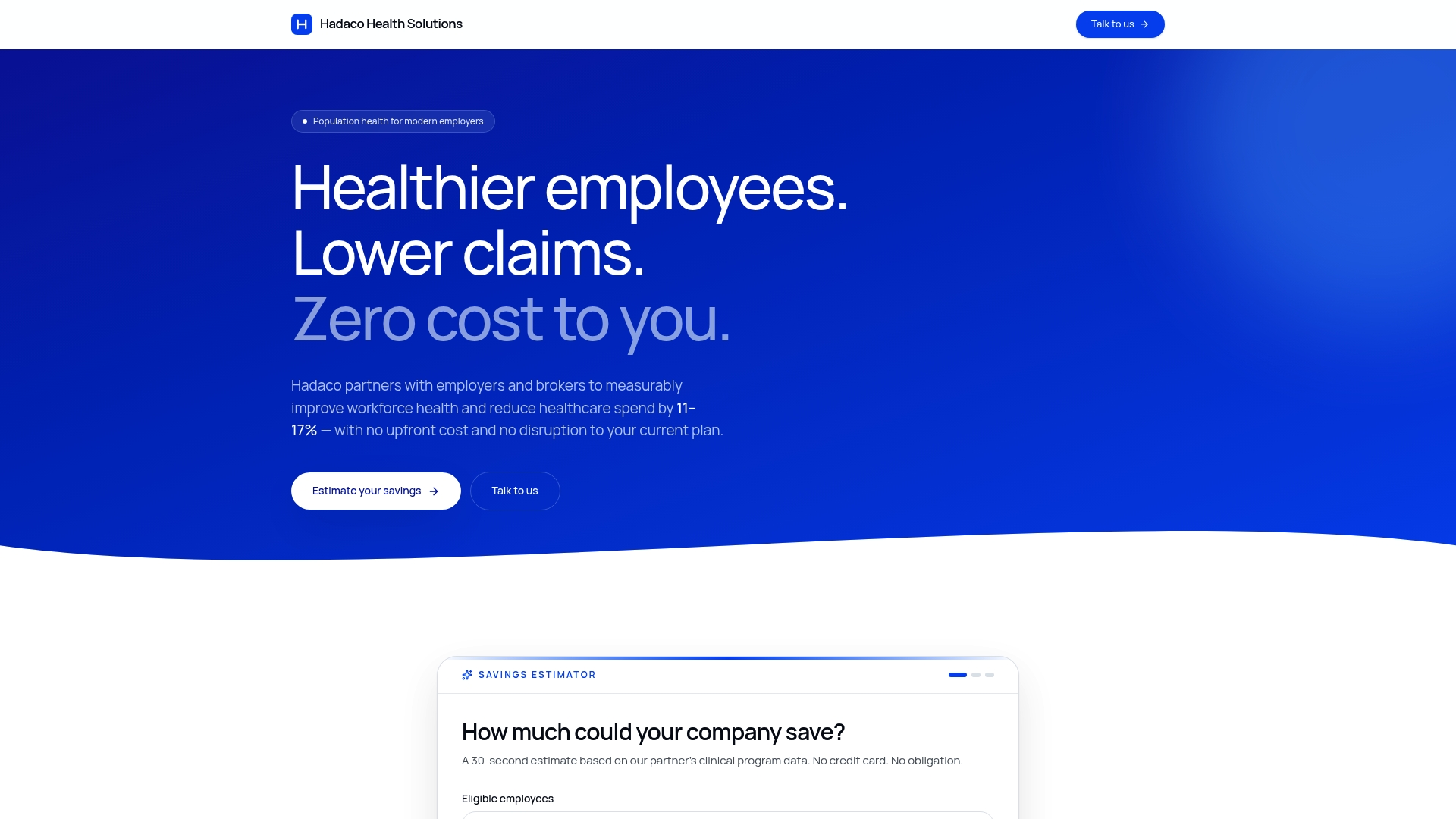
- A savings estimator that projects impact before you commit to a program.
- Quarterly reporting that tracks engagement and cost outcomes over time, not just participation.
- Integration that complements your current benefits instead of replacing them.
This path fits organizations that have already tried standalone workshops and want something that reports back to leadership with real numbers. A comparison of employer mental health platforms can help you weigh options, and you can see how our programs work at Hadaco directly.
This article is general information, not a substitute for advice from a qualified doctor. Consult a qualified healthcare professional about your own circumstances before acting on anything here.
FAQ
Can you provide some examples of misrepresentation of mental illness in the media?
Media coverage that links mental illness primarily with violence, or that uses crisis imagery without showing recovery, reinforces both public and self-stigma, according to guidance for media professionals. Advocates can counter this by offering journalists balanced sources, recovery-focused framing, and access to credible experts.
What are the common barriers to mental health care?
Stigma is one of the most consistently cited barriers to seeking mental health care, ranking as the fourth highest deterrent in a large systematic review of help-seeking research, with disclosure concerns the most frequently reported specific worry, according to research on PubMed. Other common barriers include cost, limited access to providers, and uncertainty about where to start.
How to get someone mental help when they refuse?
Listen without judgment, ask open-ended questions, and use "I" statements rather than ultimatums or shame, following SAMHSA's guidance on supporting someone who is resistant to care. If the person shows signs of crisis, call or text 988 to reach a trained counselor immediately.
What is self-stigma?
Self-stigma occurs when a person internalizes negative public attitudes about mental illness and applies them to themselves, which can lower self-esteem and delay help-seeking. It is considered a modifiable target in approaches like cognitive behavioral therapy and acceptance and commitment therapy, often combined with peer support and narrative-based work.
How long does it take to reduce stigma in a workplace?
Meaningful culture change typically takes longer than a single training cycle, since one-off workshops tend to shift attitudes only temporarily. Sustained programs that combine contact-based sharing, manager training, and quarterly measurement tend to show more durable change over time.
Sources
- What is the impact of mental health-related stigma on help-seeking? A systematic review of quantitative and qualitative studies
- Mental Health, Drug, or Alcohol Issues: How to Help Someone | SAMHSA
- Managing stigma effectively: what social psychology and social neuroscience can teach us