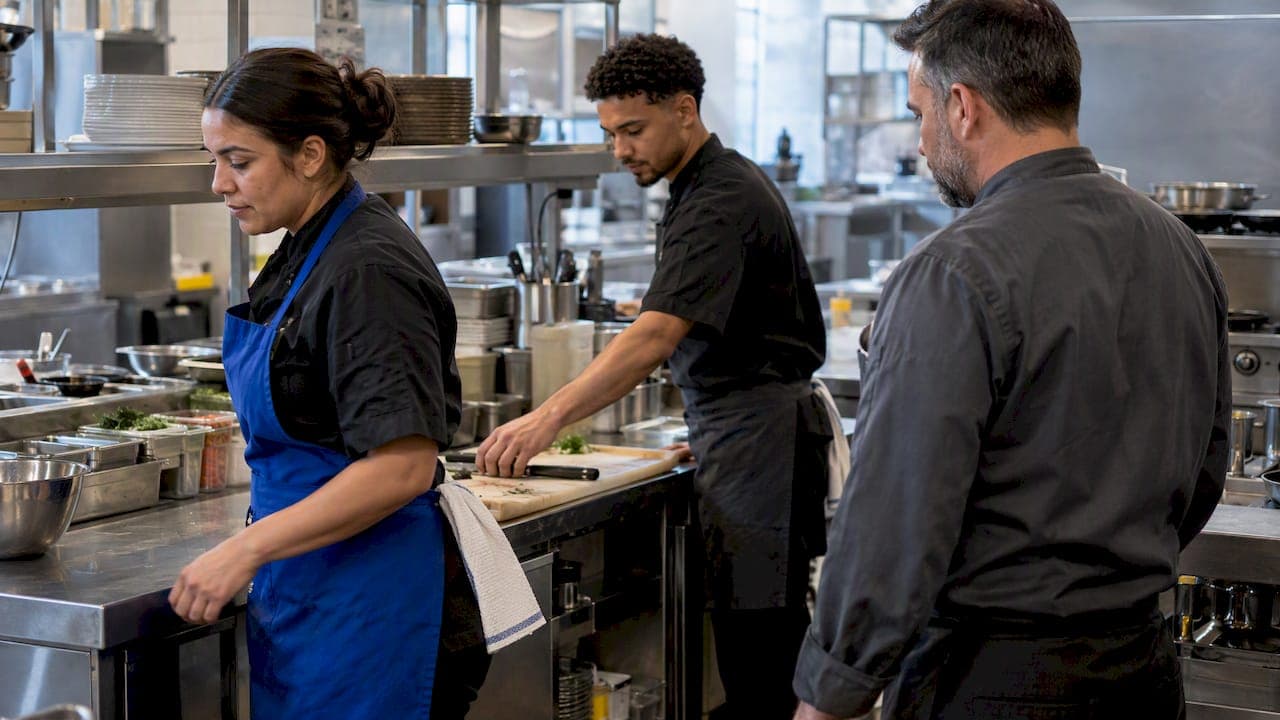
A hospitality wellness program earns its keep when it lowers turnover and health-related costs by making wellbeing part of daily operations, not a perk. Three levers do the work: schedules with reliable shift coverage, managers trained to listen and recognize effort, and health supports people can use on the clock. Total Worker Health® is the framework we organize around, and we deliver it through Hadaco.
TL;DR:
- Only about 40% of hospitality employers offer health benefits, versus 90% of U.S. employers, and program uptake remains modest even where benefits exist.
- Prioritize advance rosters, clear shift coverage, and manager training before adding benefits; paid appointment time can make existing counseling easier to use.
- Pilot one property or department, compare baseline and current turnover, absenteeism, overtime, injury counts, and anonymous pulse scores, then adjust what fails to improve.
- Keep wellness data separate from personnel decisions, use anonymous surveys, and share EAP results only in aggregate after setting a minimum group size.
- For shift workers, provide affordable meals on every shift and protect time to eat; snacks or coaching cannot compensate for missed breaks.
Table of Contents
- Why does hospitality work need programs built for the job?
- What core components belong in every program?
- How do you roll out a program step by step?
- Which metrics show whether the program works?
- What can your team do in the first 90 days?
- How do you support nutrition and lifestyle for shift workers?
- How do you add wellness to existing benefits without disruption?
- How should you communicate a wellness program to a diverse workforce?
- How do you protect confidentiality and privacy in a wellness program?
- Why treating wellbeing as infrastructure beats one-off perks
- How we help hospitality employers deliver measurable wellbeing
- FAQ
- Sources
Why does hospitality work need programs built for the job?
Hospitality jobs combine pressures that rarely show up together in other industries. Shift work scrambles sleep and family routines. Housekeepers and cooks absorb heavy physical strain. Front-line staff do emotional labor with guests all day, then go home to a schedule that changes every week. Staffing swings with occupancy and seasons, so one call-out can double everyone else's workload.
Workers say what helps most is not exotic. In survey research among hospitality employees, recognition or gratitude from managers was rated as a top factor for a supportive mental health environment, and prioritized a clear system for shift coverage. Guidance for the sector also points to unpredictable hours, high-pressure environments, and stigma as amplifiers of mental health challenges.
Set expectations realistically before you build anything:
- Fewer hospitality employers offer health benefits than employers in other industries. Research from National Louis University puts it at about 40% of hospitality employers versus 90% of all U.S. employers, citing Bureau of Labor Statistics data from 2019.
- Uptake of offered programs is modest even where they exist, and many hospitality employers report lower utilization than other industries.
- Employers are shifting toward paid time off, predictable schedules, and mental health supports, yet many still lack a concrete plan to evaluate results.
The takeaway: a program that ignores the realities of the floor, the kitchen, and the rooming schedule will sit unused.
What core components belong in every program?
Think of these as the scope you hand to an internal team or hold a vendor to. Skip anything that is only decoration.
- Scheduling and shift coverage. Publish rosters ahead of time and give people a simple way to swap or substitute shifts. Practitioner guidance treats these as operational fixes that reduce stress at the source.
- Manager capability. Train supervisors in active listening, recognition, de-escalation, and short routine check-ins. Visible support from a manager makes employees more willing to use the supports you offer.
- Accessible mental health support. Offer an employee assistance program, paid appointment time, and on-site counseling where feasible. The Breakers Palm Beach reports high retention among salaried staff after adding on-site counselors and letting staff attend appointments on the clock.
- Ergonomics and safety. Provide the right equipment, rotate tasks, and build in short stretching breaks for housekeepers and kitchen crews. Interviews with room cleaners and managers flagged workload, ergonomics, and hazards as intervention priorities.
- Financial wellbeing. Make tip and service charge policies transparent, consider earned wage access, and offer basic financial education. Managers in the same interviews named financial literacy as a retention support.
- Participation strategies. Use plain-language communication channels, peer champions, and small incentives to overcome the time and stigma barriers that keep people away.
Pro Tip: Ask each department head which one scheduling pain point causes the most call-outs, and fix that before you launch any new benefit.
How do you roll out a program step by step?
The Total Worker Health® Implementation Guidelines lay out a staged process of engaging collaborators, planning, implementing, and evaluating for improvement. Researchers used it to design interventions on safety, ergonomics, work intensity, and job enrichment for low-wage food service workers. Here is how we translate it for hospitality HR.
- Stage 1: Engage leadership and set goals. Tie targets to turnover, absenteeism, and claim trends so finance and operations care about the outcome from day one.
- Stage 2: Build participation. Run focus groups, short pulse surveys, and a cross-functional team of front-line staff and managers. The hotel interview research showed that employees and managers often name different needs, so hear both.
- Stage 3: Plan changes to working conditions. Favor scheduling guarantees, better equipment, and clear break policies over one-off events.
- Stage 4: Pilot. Pick one property or department. Train managers, give paid time for appointments, and communicate in every channel your staff actually uses.
- Stage 5: Evaluate regularly and iterate. Review the metrics in the next section, keep what moves them, and drop what does not.
The pilot is where most programs are won or lost. Keep it small enough to fix quickly and visible enough that people talk about it.
Which metrics show whether the program works?
Choose a short list and track it consistently. Hospitality HR teams commonly watch these:
| Metric | Where the data comes from | What it tells you |
|---|---|---|
| Turnover rate | HRIS | Whether people are staying |
| Absenteeism | Payroll and timekeeping | Early signs of strain |
| Overtime hours | Payroll export | Coverage gaps and burnout risk |
| Injury and accident counts | Safety logs | Whether ergonomic changes work |
| Pulse survey scores | Anonymous survey | How supported people feel |
| EAP usage | Aggregate vendor report | Whether supports are reachable |
| Internal promotion rate | HRIS | Whether people see a future |
Add exit interview themes as a qualitative check on the numbers.
Collect data without exposing individuals. Keep pulse surveys anonymous, pull aggregate-only reports from your EAP, and let HR and finance own the exports. A useful report is short: baseline versus current, a few sentences on what changed, and recommended next actions. That format keeps leadership accountable. If you want more on turning raw numbers into decisions, see our guide to employee wellness analytics.
What can your team do in the first 90 days?
Early wins build the momentum a longer program needs.
- Start: Publish rosters in advance, brief managers on daily check-ins, and post clear break protocols in every back-of-house area.
- Next: Pilot paid on-the-clock counseling hours or an EAP awareness campaign, and set up a substitution board or a simple shift-swap app.
- Then: Analyze your baseline numbers, report early outcomes to leadership, and scale what worked.
Measure quickly: one pulse question ("My manager supports my wellbeing") and a turnover snapshot at the start and end of the window.
Pro Tip: Announce the first schedule change at a pre-shift huddle and credit the staff who asked for it. Employees see that speaking up works.
How do you support nutrition and lifestyle for shift workers?
Nutrition advice written for nine-to-five workers falls flat in a kitchen or on a night audit. Start with what shift workers actually face: irregular meal times, limited food options at odd hours, and little time to eat. Interviews with hotel staff and managers listed nutrition, smoking cessation, and exercise among the needs they wanted addressed, so the demand is real.
Practical moves that fit the work:
- Make a healthy, affordable meal available on every shift, including overnight, and protect the time to eat it.
- Stock break rooms with water, protein, and fruit, but pair this with real breaks. Free snacks do little if nobody can leave the floor.
- Offer brief stretching or mobility sessions at the start of a shift, led by a supervisor or peer champion.
- Share simple sleep guidance for rotating schedules, such as keeping a consistent wake time when possible, in short handouts and huddle talks rather than long seminars.
- Offer smoking cessation resources through your benefit plan or EAP, and make them available without judgment.
Lifestyle coaching works best when it respects schedules. Offer sessions at multiple times, or deliver short content people can use on a phone between shifts. Frame all of it as support for the job, not a lecture about personal habits. Programs that hand the burden to employees tend to fail, as practitioner guidance notes, while those tied to scheduling and workload realities stick. For more tactics on getting people to take part, see our piece on wellness engagement strategies.
How do you add wellness to existing benefits without disruption?
You rarely need to rip anything out. Start by mapping what you already offer: medical plan, EAP, paid time off, retirement, any discount programs. Then find the gaps between what exists and what staff can actually use. A common gap is an EAP that nobody knows about or that can only be reached during business hours.
Good integration follows a few rules:
- Complement, don't replace. Layer new supports on top of current plans so employees keep their coverage and providers.
- Use existing channels. Route enrollment and communication through the systems your team already uses, like your HRIS, payroll portal, and pre-shift huddles.
- Remove access barriers first. Paid appointment time and flexible scheduling cost less than a new vendor and unlock the benefits already on the table.
- Align with your broker or advisor. Share your goals so renewals, plan design, and the wellness program pull in the same direction.
- Pilot before scaling. Test with one property or department so you can adjust without disturbing benefits for everyone else.
Evidence-based approaches pair well with this thinking, because they target outcomes such as chronic disease management and preventive care instead of adding activity for its own sake. The systematic literature review on hospitality employee well-being points to fair compensation, stress-coping training, counseling support, and health insurance as practices tied to better wellbeing, which reinforces that integration with core benefits matters.
How should you communicate a wellness program to a diverse workforce?
Hospitality teams span languages, ages, roles, and schedules. A single email will miss most of them. Build a plan around how people actually receive information.
Start with channels. Use pre-shift huddles, posted signs in break rooms, text messages, and a short mobile-friendly page. Translate materials into the languages your teams speak, and have bilingual supervisors or peer champions present them in person. Peer champions matter: staff trust a fellow dishwasher or front desk agent more than a corporate memo.

Then fix the message. Keep it concrete: what the support is, how to reach it, that it is paid time when applicable, and that it is confidential. Repeat it often, because turnover and rotating shifts mean new people may be hearing it for the first time. Consistent communication ranks high with workers; 75% in one survey set cited it as part of a supportive mental health environment.
Finally, lean on managers. Visible support from a supervisor, even a simple check-in or a word of praise, makes staff more willing to use what you offer, according to mental health guidance for the sector. For deeper approaches on the mental health side, our HR guide to employee mental health programs covers rollout tips.
How do you protect confidentiality and privacy in a wellness program?
Stigma is one of the biggest reasons people skip supports, so privacy is not a legal footnote. It is a participation strategy. If staff fear a manager will learn they sought counseling, they will not go.
Set clear boundaries and say them out loud:
- Aggregate reporting only. Employers should receive group-level EAP and program data, never names or individual details. Small groups can still identify people, so set a minimum group size before any report is shared.
- Separate wellness data from employment decisions. Make it explicit that participation and personal health information play no role in scheduling, discipline, or promotion.
- Limit access. Restrict who in HR can see program data, and keep health information out of general personnel files.
- Use anonymous surveys. Pulse surveys should not collect names, and open-text comments should be reviewed for identifying details.
- Put it in writing. Publish a plain-language privacy statement and review it with managers so they know what they must never ask.
Clinical background helps managers understand why confidentiality matters in care. A partner resource on ongoing mental health support explains how continuing care pathways work. If safety-sensitive roles require testing, review occupational health testing practices with legal counsel so testing rules stay separate from voluntary wellness participation. Keep the lines clear, and trust follows.
Why treating wellbeing as infrastructure beats one-off perks
My view is simple: perks are easy to buy and easy to ignore, while structure changes what a Tuesday feels like. A fruit basket does nothing for a housekeeper working a double with no coverage. A reliable schedule, a manager who notices, and a paid hour for an appointment do. Industry experts say traditional programs often fail by treating wellbeing as fragmented perks instead of embedding it in the organization. Measure it every quarter, show the numbers to leadership, and the program survives budget season. Done well, it also pairs with what we do at Hadaco: measurable programs that sit alongside your benefits instead of disrupting them.
— Gene
How we help hospitality employers deliver measurable wellbeing
Hadaco gives hospitality employers a program that fits the way operations already run:
- Evidence-based programs that complement your current benefit plans
- No upfront fees
- A transparent savings estimator so finance can see the case first
- Quarterly reporting your leadership team can act on
We built this for employers who need accountability, not another perk. Try the savings estimator or book a consultation at Hadaco, and we will show you where a hospitality wellness program can fit your properties.
FAQ
What is a hospitality wellness program?
It is an employer-run set of supports that improves the health and wellbeing of hospitality workers. The best versions fix working conditions such as scheduling and manager behavior, then add accessible mental and physical health supports. Perks alone rarely change outcomes.
What should a hospitality wellness program include first?
Start with predictable schedules, a clear shift coverage system, and manager training. Survey research among hospitality employees highlighted the value of a clear system for shift coverage. Add an EAP and paid appointment time next.
How do you measure whether it works?
Track turnover, absenteeism, overtime, injury counts, pulse survey scores, and aggregate EAP use each quarter. Compare each period to your baseline and write a short narrative of what changed. Keep individual data private.
How long does it take to see results?
Early signals such as pulse scores and call-out patterns can shift after schedule and manager changes. Turnover and claim trends take longer, so review them regularly and iterate rather than expecting a single result at 90 days.
Sources
- Using Total Worker Health® Implementation Guidelines to Design an Organizational Intervention for Low-Wage Food Service Workers: The Workplace Organizational Health Study
- Intervention needs among hotel employees and managers