
A return-to-office health policy is the part of your RTO plan that protects people, not just attendance. It should cover physical safety and air quality, mental health and workload, medical accommodations under the ADA, and a clear way to communicate and measure all of it. Most employers write the schedule first and the health side as an afterthought. This guide reverses that order and shows what each piece needs, using federal guidance from OSHA, the EEOC and the Surgeon General.
TL;DR
- Build the policy around a job-task risk assessment, not a single rule for everyone. OSHA's guidance recommends tailoring controls to where exposure actually occurs.
- Treat mental health as a design input: explain decisions, protect rest, and make confidential support easy to reach.
- Handle medical requests through an individualized interactive process. Rigid "full duty or nothing" rules have drawn EEOC lawsuits.
- Name a contact person, train in plain language, and review the policy when conditions change.
- Track claims, engagement and accommodation turnaround so you can show whether the policy works.
Table of Contents
- What a health-focused return-to-office policy should include
- Physical safety and illness prevention
- Mental health during the return
- Medical reasons and accommodation requests
- Communicate, train and measure
- Our perspective: treat the return as a health event
- Where Hadaco fits
- FAQ
- Sources
What a health-focused return-to-office policy should include
OSHA's return-to-work guidance gives the clearest federal checklist. It points employers to hazard assessment, hygiene, cleaning and disinfection, social distancing, identifying and isolating sick employees, workplace controls and flexibilities, training, and monitoring of changing guidance. The guidance was written in 2020 for a pandemic reopening, but the structure still works for any return, whether after a remote stretch, a relocation or a new hybrid schedule.
In practice, a workable policy has seven parts:
- Scope and schedule. Who returns, how many days, and which roles keep flexibility.
- Exposure and hazard review. What risks exist in each job and each space.
- Illness rules. When people stay home, how sick leave works, and what happens when someone is ill at work.
- Environment. Ventilation, cleaning, desk density and shared spaces.
- Mental health and workload. Commute strain, schedule changes, rest and access to care.
- Accommodations. How medical and disability-related requests are received and decided.
- Communication and review. Who answers questions, how training happens, and when the policy is revisited.
Write each part as a short section with an owner. A policy nobody owns tends to be ignored the first time it is inconvenient.
Start with the job, not the building
OSHA recommends assessing job tasks and categories to find where exposure may occur and tailoring controls to the resulting risk. An analyst at a private desk and a facilities technician who handles shared equipment do not face the same risks. Sort roles into a few categories, note the realistic hazards for each, and apply controls in proportion. This also keeps the policy defensible: you can explain why a rule exists.
Physical safety and illness prevention
The same OSHA guidance says employers should recognize that exposure risks vary by workplace and job, improve ventilation, clean surfaces regularly, encourage sick workers to stay home, and promote flu vaccination. It also suggests using respiratory-infection activity data to decide on measures such as remote work and masking. That last point matters for policy design: write triggers, not permanent rules. For example, "when local respiratory illness activity is high, we offer remote days to people with symptoms or in high-risk roles" is easier to apply than a blanket mandate.
Sick-day rules that people will actually follow
If your attendance expectations are strict, people will come in sick. Spell out that staying home when ill is expected, how to report it, and whether remote work is an option for mild symptoms. Pair that with the leave and pay rules in your benefit plans so nobody has to guess. If vaccination is part of your approach, the legal side deserves care, and our guide to workplace vaccination policy walks through how HR, operations and wellness teams reduce legal risk.
Indoor air quality is part of the policy
Offices that sat half empty may have had ventilation and maintenance schedules change. OSHA's indoor air quality guidance recommends a systematic program covering management commitment, training, employee involvement, hazard identification and control, auditing, inspections, maintenance logs, repairs and follow-up. Two practical moves from that guidance:
- Designate an IAQ coordinator. One named person keeps records and receives concerns.
- Know your landlord's program. OSHA says employers in leased space should understand the building manager's mitigation program and negotiate lease criteria for outdoor-air ventilation.
When an employee reports stuffy air, odors or recurring symptoms, respond quickly and document it. OSHA recommends prompt, effective responses to IAQ concerns with documented assessment and corrective action. A log of complaints and fixes protects employees and gives you evidence if questions arise later.
Mental health during the return
Search interest in this topic is split between physical safety and mental health, and the second is where many policies are thinnest. A return to the office can change commutes, childcare, costs, focus time and social pressure all at once. Those are workload and job-design issues as much as personal ones.
The Surgeon General's framework names physical and psychological safety as a critical foundation for workplace mental health and well-being. Its guidance to employers includes reviewing physical and psychological hazards, working with employees to remove them, explaining key decisions, protecting adequate rest, and promoting confidential, accessible mental health services and time off for care.

Explain the change and involve people
OSHA's Technical Manual says reducing job stress takes adequate information from management, explanations of workplace changes and schedules, and employee participation in planning and implementation, along with attention to ergonomics and work-rest balance. For an RTO rollout, that translates into three habits:
- Announce the reasons behind the policy, not only the rules.
- Ask for input before details are final, through manager conversations or short surveys, and show what changed because of it.
- Give notice. A new schedule dropped with a week's warning hits caregivers and long-distance commuters hardest.
Team dynamics also shift when people share space again. Tools such as DISC personality assessments can give teams a common language for how colleagues prefer to communicate and handle pressure, which helps when working styles that were hidden on video calls clash in person.
Protect rest and watch for burnout
Long commutes and compressed in-office days can eat into sleep and recovery time. Managers should know the early signs of overload and feel free to adjust deadlines. If someone is already depleted, practical burnout recovery steps are worth sharing as part of your wellbeing resources, alongside your employee assistance program and benefit plan options.
Connect the policy to your benefits
A policy that says "support is available" without saying where fails the test of accessibility. List the specific channels: EAP, telehealth, therapy benefits, coaching, manager conversations. If you are still choosing or consolidating, our HR guide to employee mental health programs and rollout guide for mental health integration cover how to fit services into the plans you already have. Crisis readiness belongs here too, and our employer guide to suicide prevention explains what managers and HR should be prepared to do.
Some groups need extra thought. Employees with ADHD often feel the change in environment sharply, and a short pilot can show what helps; see our one-quarter HR pilot for ADHD support. Roles with constant pressure, such as phone-based work, usually need the job fixed before wellness coaching helps, as we explain in our call center wellness guide.
Medical reasons and accommodation requests
One of the questions readers ask most is what medical reasons might keep someone from returning to the office, and whether an employer can refuse. The answer is less about a list of conditions and more about process.
The EEOC's guidance says disabilities and medical restrictions may require leave, altered schedules or other accommodation. Employers should promptly engage in an individualized interactive process and consider effective options such as telework, modified schedules, ergonomic changes, leave or reassignment. An employee does not need to be fully healed to work, provided they can do the job with accommodation and it would not cause undue hardship.
What enforcement looks like
Two EEOC announcements show how this plays out in return-to-office settings:
- In an August 2023 case, the agency alleged that denying temporary remote work to an employee undergoing radiation treatment and immunosuppression during a return-to-office transition violated the ADA's accommodation requirement. The employer agreed to pay $32,371 to settle.
- In July 2025, the EEOC announced a $919,000 resolution and warned that rigid full-duty or automatic-discharge policies can violate the ADA, because employers must consider whether an employee can work with restrictions or reasonable accommodation.
The lesson is not that everyone gets remote work. It is that a blanket mandate with no exception route invites risk. Telework is one of several options, and the decision should rest on the employee's documented needs and the essential functions of the job.
A simple accommodation workflow
- Make the route visible. Say in the policy who receives requests and that no special wording is needed.
- Respond quickly. Acknowledge in a day or two and start the conversation.
- Talk it through. Ask what limits the person faces, which job tasks are affected and what would help.
- Request medical documentation only where needed, and keep it confidential and separate from personnel files.
- Decide and write it down, including a date to review temporary arrangements.
- Train managers not to decide on their own or to ask about diagnoses.
Wellness programs sit close to this area, because incentives and health questions can raise ADA issues of their own. Our guide to ADA-compliant wellness for U.S. employers covers that boundary. For specific cases, involve employment counsel.
Communicate, train and measure
A good policy fails if no one understands it. OSHA's guidance calls for communicating controls and flexibilities, giving workers a contact for questions, and monitoring guidance and community conditions so plans can be adjusted. It also recommends training in an appropriate language and literacy level on exposure risks, site-specific protections and how workers can protect themselves.
A rollout sequence that works
- Four to six weeks before: share the draft, the reasons and the accommodation route. Collect questions.
- Two weeks before: publish the final policy, FAQ and contact. Brief managers first so they are not surprised.
- First month: hold short check-ins, review IAQ and facilities issues, and track accommodation requests.
- Each quarter: review the data and update the policy.
What to measure
Pick a small set of indicators you will genuinely review:
| Area | Example measure | Why it matters |
|---|---|---|
| Safety | IAQ complaints and time to resolve | Shows responsiveness |
| Illness | Sick-leave patterns, reported exposures | Signals whether people stay home when ill |
| Mental health | Use of EAP and mental health benefits, pulse survey results | Shows whether support is reachable |
| Accommodations | Requests received, time to decision | Shows process health and legal exposure |
| Retention | Voluntary turnover after the change | Captures hidden costs of the policy |
| Cost | Claims trends for chronic and behavioral conditions | Connects policy to benefit spend |
The last row is where many HR teams stop short. Stress, disrupted routines and missed care can show up months later in claims. Chronic conditions in particular benefit from steady support through a schedule change, and our evidence-based plan for workplace chronic disease costs and Total Worker Health guide show how to connect job design and health programs.
Our perspective: treat the return as a health event
At Hadaco, we work with employers on population health, and we see the same pattern in RTO planning. Leaders frame the return as a scheduling decision and then discover it is also a health event. Routines change, care gets postponed, and people with chronic conditions or caregiving duties absorb the cost quietly. That cost surfaces later, in engagement, absence and claims.

Our view is that a policy should do three things at once. It should reduce avoidable risk in the workplace. It should make support easy to reach for the whole person: chronic disease, preventive care, mental health and engagement. And it should complement the benefit plans employees already have rather than disrupt them. Adding a new vendor portal in the same month as a new schedule is a good way to get low participation.
The second thing we insist on is measurement. If you cannot say whether the policy changed participation, outcomes or costs, you are guessing. That is why we favor transparent savings estimates and quarterly reporting, so finance and HR look at the same numbers.
— Gene
Where Hadaco fits
If your return-to-office plan raises questions about chronic conditions, preventive care or employee engagement, our population health program is built to work alongside your current benefit plans without disrupting them. Employers contract with us on a performance basis, with no upfront fees, and we report outcomes quarterly. In their first year, companies often see average savings of $451 per employee, and you can test your own numbers with our savings estimator.
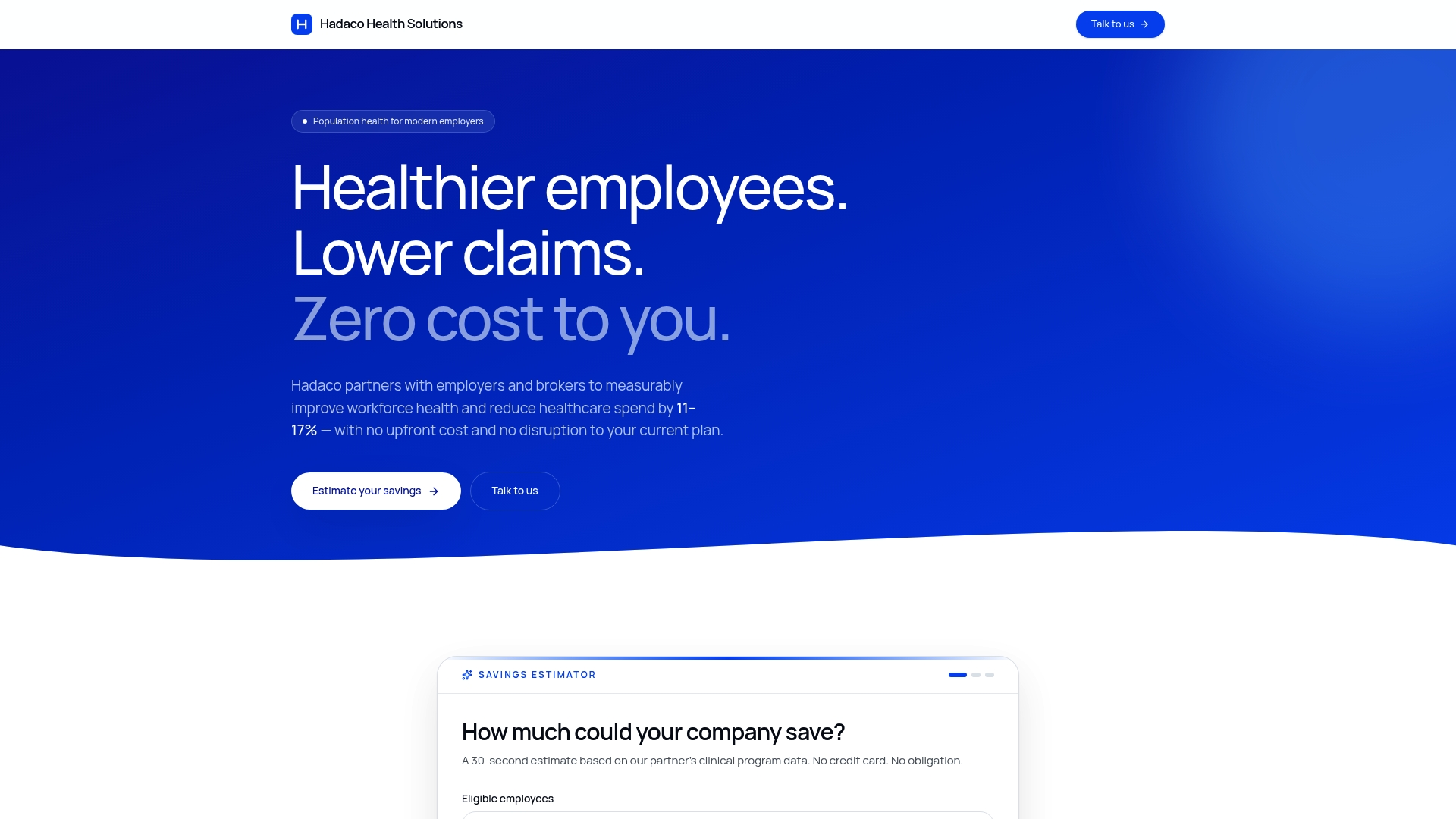
If you are a benefits consultant evaluating options for a client, we support brokers too. Book a consultation to see how a program could fit your population.
FAQ
What should a return-to-office health policy include?
At minimum: a job-based risk assessment, illness and sick-leave rules, ventilation and cleaning practices, mental health and workload support, an accommodation process, employee training and a named contact. OSHA's return-to-work guidance lists these as core elements. Review the policy as conditions change.
Can my employer refuse my request to work remotely for medical reasons?
Not automatically. Under the ADA, an employer must consider reasonable accommodation through an interactive process, and telework is one option among several. The employer can deny an option that would cause undue hardship or that you do not need to do the job, but it should discuss alternatives. If you are unsure, an employment attorney or the EEOC can advise.
How can employers support mental health when people return to the office?
Explain the reasons for the change, give notice, involve employees in planning, protect rest and make confidential care easy to find. The Surgeon General's framework treats psychological safety as a foundation. Managers should also be trained to spot overload and to adjust workloads.
Do employers have to require masks or vaccines?
OSHA's guidance encourages flu vaccination and suggests using respiratory-infection activity data to decide on measures such as masking and remote work, which points toward flexible triggers over permanent mandates. Vaccine requirements carry legal considerations, including accommodation duties, so review them with counsel.
How do we know the policy is working?
Track a short list of indicators: air-quality complaints and fixes, sick-leave patterns, use of mental health benefits, accommodation turnaround, turnover and claims trends. Review them every quarter and share results with leadership.
Sources
- Guidance on Returning to Work (OSHA)
- Indoor Air Quality in Commercial and Institutional Buildings (OSHA)
- Workplace Mental Health & Well-Being (HHS Surgeon General)
- OSHA Technical Manual, Section III, Chapter 2
- Disability Discrimination and Reasonable Accommodation (EEOC)
- United Labor Agency EEOC settlement, August 2023
- Western Distributing EEOC announcement, July 2025
- DISC personality assessments for teams
- Burnout recovery steps