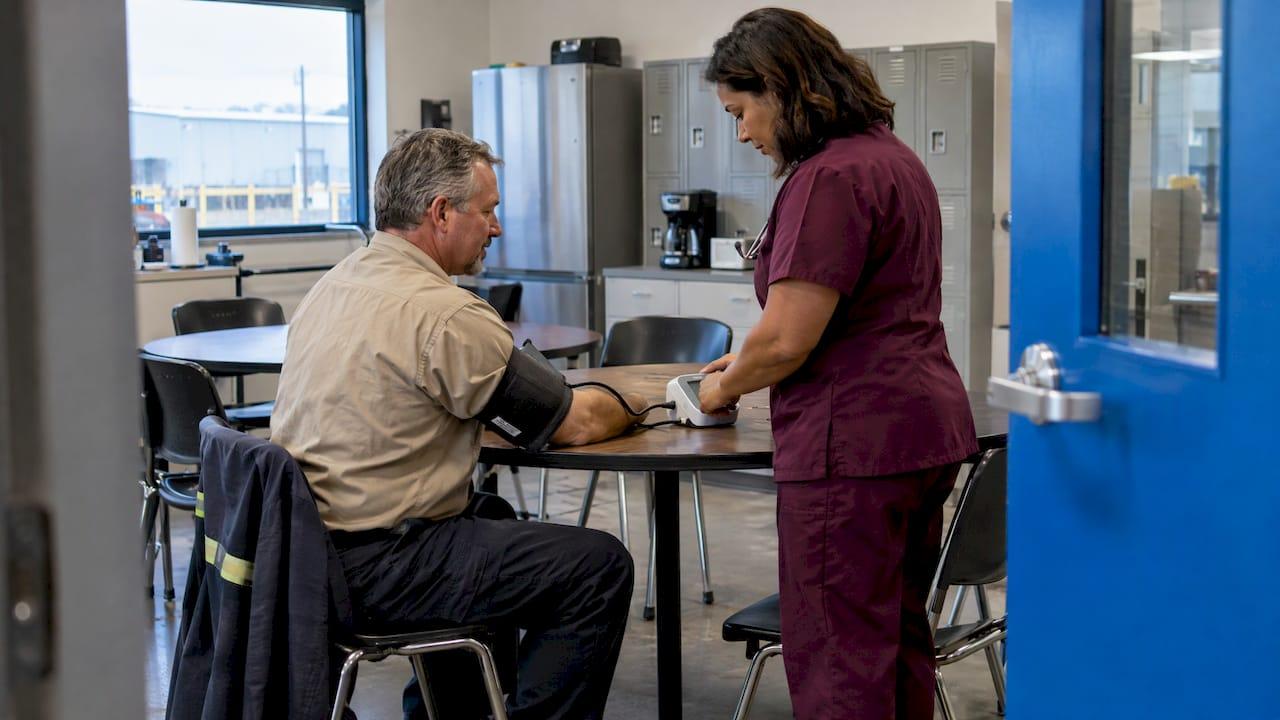
Rural workforce health programs come in two kinds. Federal and state programs recruit, train and keep clinicians in rural communities. Employer programs improve the health of the people you employ and lower the claims your plan pays. If you run HR, benefits or finance at a rural or multi-site employer, the first kind affects the care available near your employees, but only the second changes your cost trend. We built Hadaco's population health programs for the second job: evidence-based interventions that sit alongside your existing benefit plans, with no upfront fees.
This guide explains both, so you can see which levers belong to government and which belong to you.
TL;DR
- Government rural workforce programs (loan repayment, residencies, grow-your-own training) add clinicians to shortage areas. They do not manage your employees' chronic conditions or your claims.
- Rural residents die at higher rates from heart disease and cancer than urban residents, so a rural employer often carries more preventable claim risk.
- Your strongest levers are chronic disease support, preventive care, mental health access and engagement, layered onto the plan you already have.
- Judge any program by measurable outcomes: a savings estimate before you sign, and regular reporting after.
- Hadaco offers population health programs with no upfront fees, a savings estimator and quarterly reporting.
Table of Contents
- Two meanings of "rural workforce health program"
- Why rural employers carry more health risk
- What the government programs do for you, and where they stop
- What an employer-side rural workforce health program includes
- How to evaluate a program before you commit
- How this fits with your community's workforce efforts
- Perspective
- Promo: see your own numbers first
- A practical 90-day plan for a rural employer
- FAQ
- Sources
Two meanings of "rural workforce health program"
Search results for this phrase are dominated by programs that build the health care workforce itself. The Department of Health and Human Services describes federal support for staffing rural and underserved areas through the Rural Residency Planning and Development program, residency slots and National Health Service Corps scholarships and loan repayment. States run their own versions. Maryland, for example, funds apprenticeships and training for community health worker and peer recovery roles under its Rural Health Transformation work.
Those programs answer a real problem. According to the National Conference of State Legislatures, nearly 1 in 4 Americans lives in a primary care shortage area, and 72% of the roughly 92 million people in those areas live in rural communities. The same page reports that rural areas hold 70% of mental health shortage areas and that clinicians there face burnout and high turnover.
If you are a hospital, clinic or health system, those programs may be directly open to you. If you are an employer of any other kind (manufacturing, agriculture, logistics, retail, schools, local government), they matter in a different way: they shape how far your employees must travel and how long they wait for care. They do not change how your employees' conditions are identified, managed and paid for. That is the part you control.

Why rural employers carry more health risk
The gap shows up in the numbers. CDC's National Center for Health Statistics found that by 2019 rural death rates were 21% higher than urban rates for heart disease and 15% higher for cancer, with the widest rural-urban differences in heart disease, cancer and chronic lower respiratory disease. A Richmond Fed analysis likewise notes that rural counties show higher incidence of some chronic conditions and lower life expectancy, and that poor health and weaker employment outcomes can feed each other.
For a CFO, the translation is straightforward. Chronic conditions that are caught late or managed unevenly produce expensive events: emergency visits, admissions, readmissions and lost workdays. In an area with fewer clinicians, the odds of late detection and delayed follow-up go up. The cost lands in your claims.
What the government programs do for you, and where they stop
It helps to be precise about what these programs deliver.
| Program type | What it does | What it does not do |
|---|---|---|
| Loan repayment and scholarships | The NHSC loan repayment program offers up to $75,000 for primary care clinicians and up to $50,000 for dental or behavioral health clinicians in exchange for two years of service at an approved site in a shortage area | Does not reach your employees directly, and only approved sites participate |
| Residency and training funding | Creates more physicians and allied health staff over years | Takes years to affect local supply |
| Grow-your-own pipelines | Washington's toolkit describes K-12 programs, scholarships and apprenticeships that bring local people into health careers | Does not manage a single employee's diabetes or blood pressure |
| State transformation grants | Fund workforce development in rural areas | Go to eligible health care and community organizations, not to your benefits budget |
These are long-term supply investments. They are worth supporting in your community, and an employer can partner with a local school or technical college on a pipeline. But the Rural Health Information Hub itself frames them as long-term strategies. A benefits leader with a renewal due this year needs something that works inside the plan year.
What an employer-side rural workforce health program includes
When your employees live far from specialists, the program has to bring support to them and make the most of the care that is nearby. Five components carry most of the weight.
1. Chronic disease support that does not depend on a nearby specialist
Hypertension, diabetes, heart disease and respiratory conditions drive much of the rural gap described above. Effective programs identify who is at risk from claims and screening data, then provide structured, evidence-based support between visits. The aim is fewer crises, not more paperwork.
2. Preventive care that people actually use
Preventive screenings and vaccinations only reduce claims if employees complete them. Access barriers (distance, shift schedules, appointment waits) are the usual reason they do not. Our guide on workplace vaccination clinics shows how widely turnout varies, from 5.7% to 88.9%, depending on how the clinic is run.
3. Mental health access
With 70% of mental health shortage areas in rural communities (per the NCSL page above), a benefit that lists a behavioral health network is not the same as access. Virtual options help close the distance. Telehealth providers, for instance, now deliver primary care, therapy and same-day video visits to rural patients, which gives remote workers a route to care that does not depend on a local clinic's openings. A population health program should coordinate with these options rather than leave employees to find them alone.
4. Reducing avoidable emergency and hospital use
When the nearest primary care office is a long drive away, the emergency room becomes the default. A staged plan to steer that care elsewhere pays off. See our 90/180/365 roadmap for reducing ER visits and our employer playbook on readmission reduction.
5. Engagement that fits the work
Rural employers often have dispersed sites and non-desk roles. A portal and a newsletter will not reach a crew on the road or a night shift. Participation is the make-or-break variable, which is why we wrote about wellness engagement strategies that raise participation. Related industries face the same scheduling problem: see our pieces on truck driver wellness and remote workforce wellness.
How to evaluate a program before you commit
A benefits consultant or CFO should ask five questions of any vendor, including us.
- Does it complement or replace your plan? Replacing carriers, networks or plan design adds disruption and risk at renewal. A program that layers onto the current plan keeps employee communications simple.
- How is it paid for? Upfront fees put the risk on you. Fees tied to demonstrated savings and engagement put the risk on the vendor.
- Can you see an estimate first? A savings estimator lets finance test assumptions against your own headcount before any contract.
- What gets reported, and how often? Quarterly outcome reporting gives you a regular, comparable view of results, so the program is accountable to numbers rather than anecdotes.
- Does it address the whole person? Chronic disease, prevention, mental health and engagement all feed claims. A program that handles one while ignoring the rest leaves savings on the table.
A worked example shows why the estimator and reporting matter. Take an employer with 400 covered employees. In their first year, companies working with Hadaco often see average savings of $451 per employee. Applied to 400 employees, that is $180,400 in the first year. Your own figure will differ, which is the reason to run your headcount and claims profile through an estimate before deciding, then compare it against quarterly reports once the program is live.
How this fits with your community's workforce efforts
Nothing here argues against supporting local clinician pipelines. If your county has a hospital or clinic applying for HRSA-defined rural workforce funding, being a visible local employer helps: you can offer clinical placements, sit on an advisory group, or hire graduates. Those steps strengthen the care ecosystem your employees use.
But treat the two efforts as separate budget lines with separate timelines. The first builds supply over years. The second manages risk and cost this plan year.
Perspective
Most of what gets written under "rural workforce health" is about clinicians. That work matters, and an employer cannot hurry it. What an employer can do is decide whether the people it already pays are being found, supported and followed up before a condition becomes a claim.
We built Hadaco around that idea. Our programs address chronic disease, preventive care, mental health and engagement together, because employees do not experience their health in separate categories. We layer onto the benefit plans you already have instead of asking you to replace them, and we do not charge upfront fees, so finance is not asked to fund a bet.
Distance makes all of this harder, and it makes measurement more important. That is why we put a transparent savings estimator in front of you at the start and report outcomes every quarter. If a program cannot show you what it is doing to your claims, you cannot manage it.
Gene
Promo: see your own numbers first
Hadaco provides population health programs for employers: evidence-based support for chronic disease, preventive care, mental health and engagement, integrated with your current benefits and delivered with no upfront fees. You can start with our savings estimator, then follow the results in quarterly reporting. Brokers and benefit advisors can work with us as well. Explore Hadaco's population health programs and book a consultation.
A practical 90-day plan for a rural employer
Days 1 to 30: understand the risk. Pull a claims summary for the last 12 to 24 months. Identify the top chronic conditions, emergency visit rates and any readmissions. Note which sites or shifts are farthest from care.
Days 31 to 60: set the target and the measures. Agree with finance on the outcomes that matter: claim cost per member, ER use, completion of preventive screenings, program participation. Decide who will review quarterly results.
Days 61 to 90: launch and communicate. Introduce the program in ways that fit how your people work: supervisor huddles, text messages, on-site sessions at remote locations. For a longer view of what trips programs up, see our 2026 guide to workplace wellness challenges.
If you are a benefits consultant, the same sequence works as a client intake: the claims review and measures come first, and the program is chosen to fit them.

FAQ
Are rural workforce health programs the same as employee wellness programs?
No. Government rural workforce programs aim to increase the supply of clinicians in shortage areas. Employee wellness and population health programs aim to improve the health of an employer's own workforce and reduce claims. Rural employers can benefit from both, but only the second sits in your benefits budget.
Can a private employer apply for federal rural health workforce funding?
Eligibility depends on the program. For example, the Department of Labor's H-1B Rural Healthcare Grants list employers in the healthcare sector, healthcare associations and workforce boards among eligible lead applicants. A non-healthcare employer usually does not qualify directly, but may partner with an eligible organization. Check the current program page for requirements.
Will a population health program disrupt our existing health plan?
It should not. Hadaco's programs are designed to complement existing benefit plans rather than replace them, so your carrier, network and plan design stay in place.
How do we know whether a program is saving money?
Ask for an estimate before you start and regular outcome reports afterward. Hadaco provides a savings estimator up front and quarterly reporting, so you can compare projected and actual results against your own claims.
Sources
- Recruit, Train, and Retain Future Health Workers, HHS.gov
- Rural Health Transformation Program, Maryland Department of Labor
- Strengthening the Rural Health Workforce, NCSL
- Trends in Death Rates in Urban and Rural Areas, CDC NCHS
- Working on Wellness: The Rural Health and Employment Link, Richmond Fed
- Loan Repayment Programs for Health Careers, HRSA Bureau of Health Workforce
- Rural Health Workforce: Grow Your Own Toolkit, Washington State Department of Health
- Education and Training of the Rural Healthcare Workforce, Rural Health Information Hub
- California Rural Health Transformation FAQs, HCAI
- H-1B Rural Healthcare Grant Program, Apprenticeship.gov
- Telehealth for Rural Areas, Diamond Wellness